raw dna
Genetic Variants: What Raw DNA Files Can Show
Learn what genetic variants are, how they appear in raw DNA files, and why a marker, genotype, and clinical interpretation are separate things.
GenoSight Team · October 9, 2026 · 5 min read
A genetic variant is a difference in DNA sequence at a specific location. In a raw DNA file, the useful first question is not whether a variant sounds important; it is which marker was reported, what genotype was called, and what evidence supports any interpretation. A variant label alone does not diagnose a condition or prove disease risk.
Evidence checked October 9, 2026. All table rows below are fictional teaching examples, not personal results, real medical findings, or GenoSight user data.
What the term genetic variant means
MedlinePlus Genetics defines a gene variant as a lasting DNA sequence change within a gene and notes that the word variant is often preferred because DNA changes do not always cause disease (MedlinePlus Genetics). NHGRI uses a broader frame for genomic variation: DNA sequence differences among individuals or populations, with some variants affecting biological function and others having no biological effect (NHGRI genomic variation).
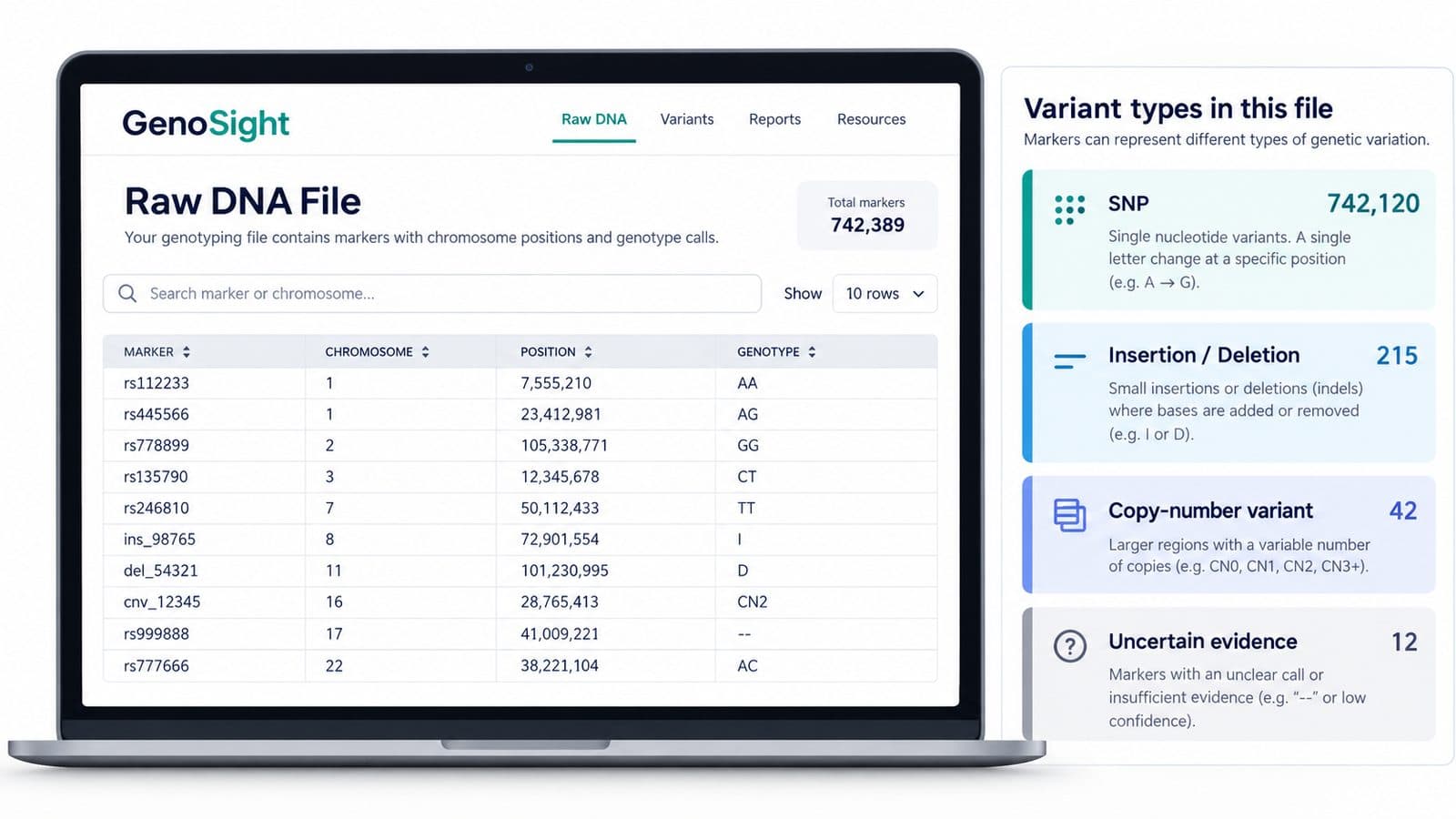
That broad definition is why search results can feel confusing. A variant can be a single-letter difference, a small insertion or deletion, a repeat expansion, a larger structural change, or a copy-number difference. The MedlinePlus guide to variant types lists examples such as substitutions, insertions, deletions, duplications, inversions, frameshifts, and repeat expansions.
For people using consumer raw DNA data, the everyday version is narrower. A 23andMe, AncestryDNA, or MyHeritage raw file usually contains selected marker calls. Many rows are SNP-style markers, but the file is not a full catalog of every inherited variant, structural variant, or clinically reviewed finding in your genome.
How variants appear in a raw DNA file
A raw DNA row often contains a marker identifier, chromosome, position, and genotype. The genotype is the reported result at that location. NHGRI describes genotype as the type of variant present at a given locus, often represented by symbols or DNA letters such as CC, CT, or TT (NHGRI genotype).
| Fictional marker | Chromosome | Position | Reported genotype | First safe reading |
|---|---|---|---|---|
| rs112233 | 1 | 7,555,210 | AA | A two-letter call at this marker |
| rs445566 | 1 | 23,412,981 | AG | Different alleles at this marker |
| ins_98765 | 8 | 72,901,554 | I | A provider-specific insertion-style notation |
| del_54321 | 11 | 101,230,995 | D | A provider-specific deletion-style notation |
| cnv_12345 | 16 | 28,765,413 | CN2 | A copy-number-style note, not a simple SNP call |
| rs999888 | 17 | 41,009,221 | -- | Missing or no-call value |
The marker label, position, genotype, and reference build should stay together. If you search the marker without preserving that context, it is easy to mix up a classroom definition, a database identifier, a research association, and a clinical claim.
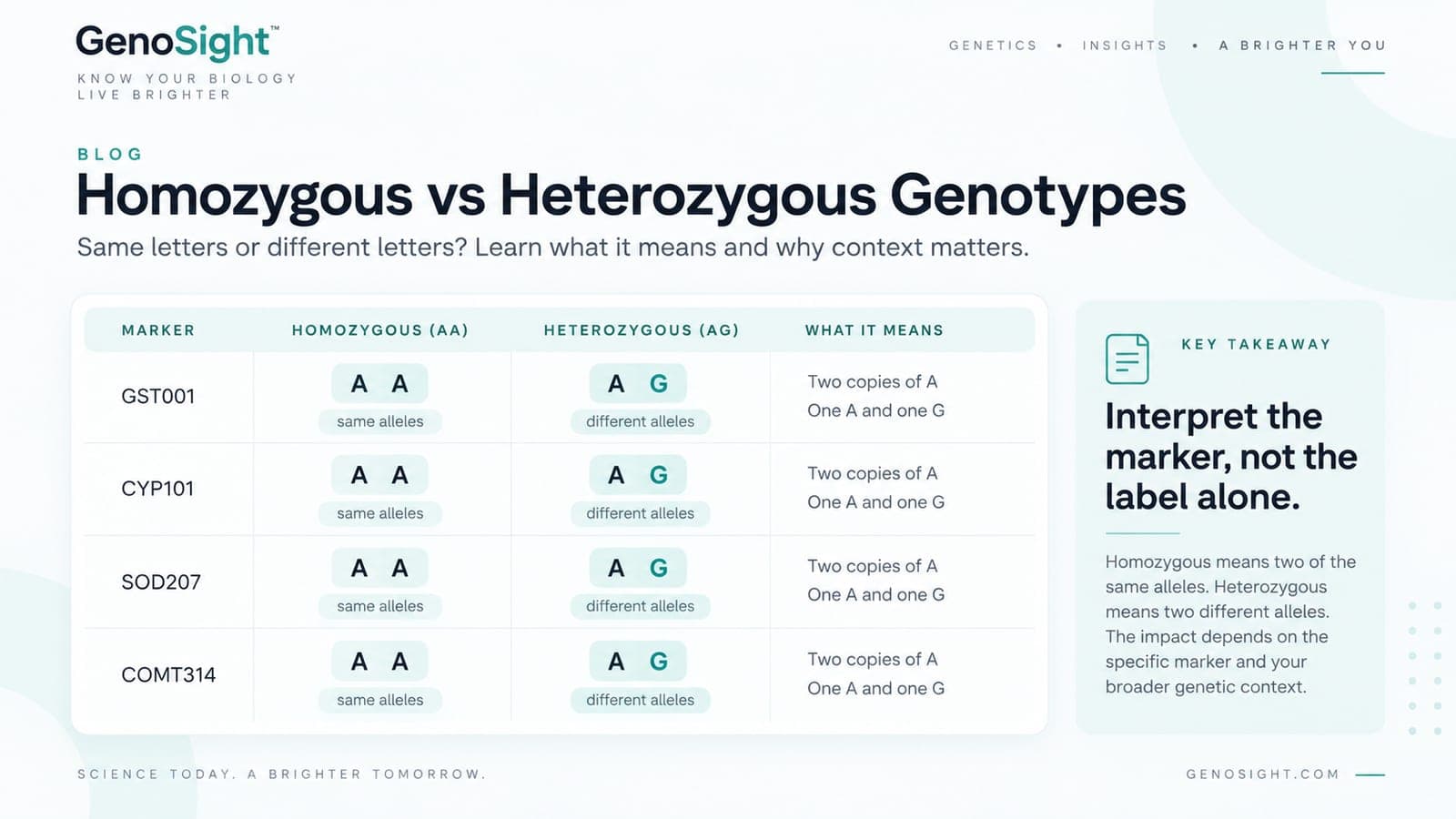
Our rsID meaning guide explains why an rs number identifies a marker rather than a health result. Our homozygous vs heterozygous guide explains how to read matching and different allele pairs without turning the label into a diagnosis.
The four layers to keep separate
Most interpretation mistakes happen when four layers collapse into one.
| Layer | What it answers | What it does not answer by itself |
|---|---|---|
| Marker | Which location or assay row is being discussed | Whether the result affects health |
| Genotype | What was reported at that marker | Whether the call is clinically important |
| Variant type | Whether the change is a SNP, insertion, deletion, repeat, structural variant, or another form | Whether the variant is harmful or benign |
| Clinical or trait interpretation | What evidence says about a condition, trait, drug response, or uncertainty | Whether the raw file alone is enough for a medical decision |
ClinVar shows why the interpretation layer needs special care. ClinVar archives variant classifications and supporting evidence from submitters, but it does not independently curate every submitted classification; it also preserves record versions and shows review status so users can judge confidence (ClinVar introduction). ClinVar classification terms include benign, likely benign, uncertain significance, likely pathogenic, pathogenic, drug response, association, protective, and other terms depending on context (ClinVar classification terms).
That does not mean every raw DNA marker has a ClinVar answer. It also does not mean a database entry applies cleanly to your file. The exact variant, transcript or genomic coordinate, condition, inheritance pattern, submission history, and review status matter. If the classification is uncertain, our VUS guide explains why uncertainty should remain part of the result.
What consumer raw DNA files can and cannot support
Consumer raw DNA files are useful for educational review when the question is narrow. They can help you identify selected markers, organize evidence-aware notes, and decide which report area deserves attention first. They can also help you avoid searching vague phrases like "variant risk" without an exact marker.
They cannot show every genetic variant. Our genotyping vs sequencing guide explains why an array-based raw file usually measures selected positions rather than sequencing the whole genome. A missing row, no-call value, or absent marker should not be treated as proof that a variant is absent.
Raw files also cannot replace clinical testing. Some medically important variants need confirmatory testing, a different assay, family history, laboratory quality controls, or professional interpretation. Larger structural variants, repeat expansions, mitochondrial variants, somatic cancer variants, and pharmacogenomic results may require methods and evidence beyond a basic consumer export.
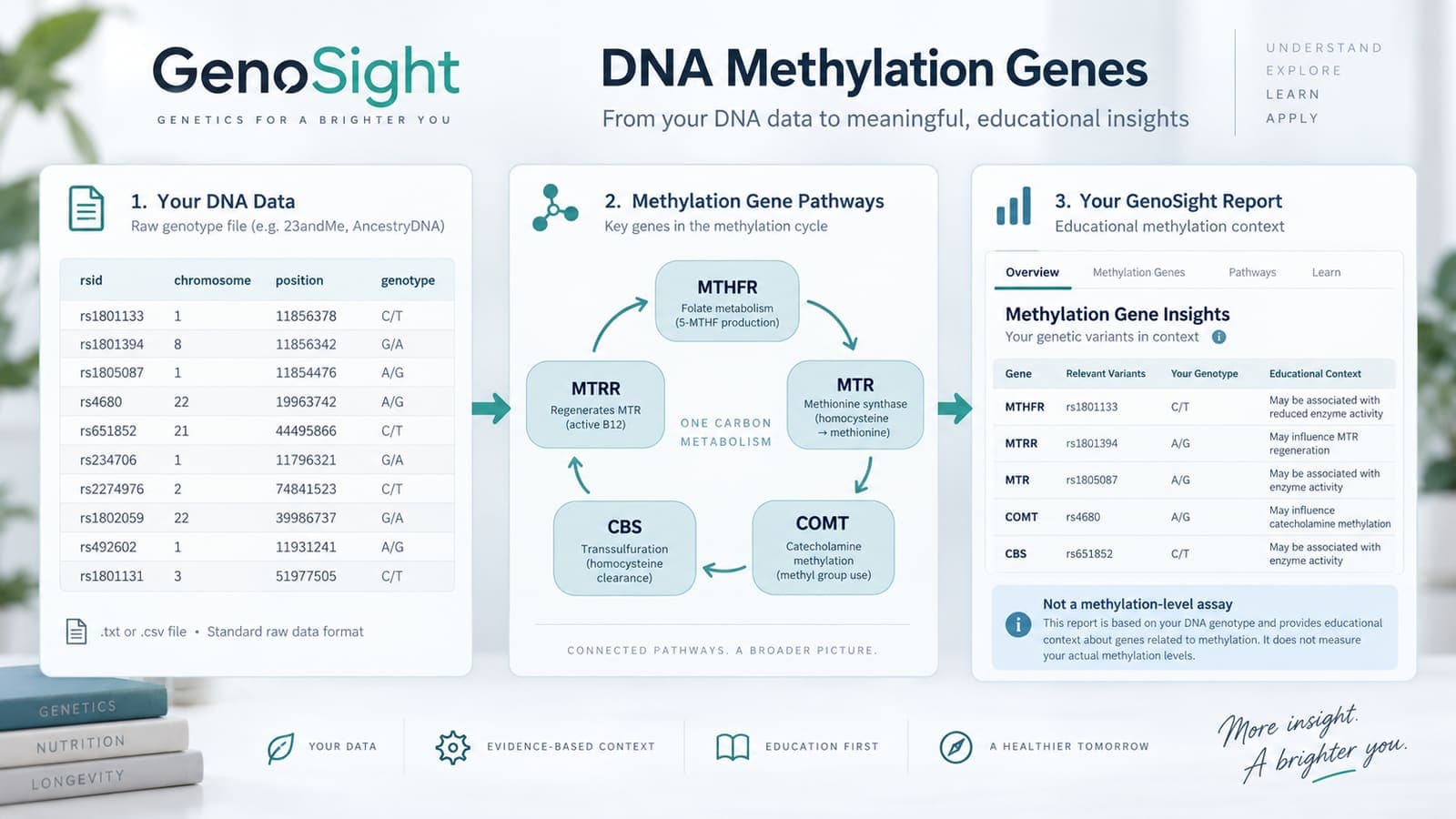
GenoSight's educational workflow keeps those boundaries visible. It starts from the original file, preserves marker context, separates genotype from interpretation, cites sources, and adds caveats when evidence is limited. For an example of that framing, see a GenoSight sample report.
A practical review workflow
Use this sequence before acting on a variant claim:
- Record the original row. Keep the marker, chromosome, position, genotype, provider, file date, and reference build together.
- Identify the type of claim. Decide whether the source is defining a variant, reporting an association, classifying clinical significance, or giving advice.
- Check whether the file measured it directly. Do not infer a missing variant from a blog post, screenshot, or unrelated marker.
- Read evidence confidence separately. Look for review status, submitter evidence, population context, and whether the claim is about disease, drug response, trait association, or uncertainty.
- Use clinical guidance for clinical decisions. Do not change medication, screening, pregnancy care, or supplements from a raw-file row alone.
Review raw DNA variants in context
GenoSight can turn a compatible raw DNA file into educational reports that keep marker calls, genotype context, evidence, and limitations separate.
The practical takeaway
Genetic variants are real DNA differences, but a raw DNA file usually gives you selected marker calls rather than a full clinical interpretation. The safest reading habit is to keep the marker, genotype, variant type, and evidence level separate until a trustworthy source supports a specific conclusion.
That is also what makes a broad "what is a genetic variant" question useful for raw DNA users. The definition is only the start. The next step is learning which part of the file you are looking at, what was actually measured, and what the evidence can responsibly say.
Sources
- MedlinePlus Genetics - What is a gene variant and how do variants occur?, accessed October 9, 2026.
- MedlinePlus Genetics - What kinds of gene variants are possible?, accessed October 9, 2026.
- NHGRI - Genomic Variation, accessed October 9, 2026.
- NHGRI - Genotype, accessed October 9, 2026.
- NCBI ClinVar - What is ClinVar?, accessed October 9, 2026.
- NCBI ClinVar - Representation of classifications in ClinVar, accessed October 9, 2026.