snps explained
SNP Microarray: What Raw DNA Files Measure
Learn how SNP microarrays create selected marker calls, what appears in a raw DNA file, and why those rows are not a full clinical genome result.
GenoSight Team · October 13, 2026 · 5 min read
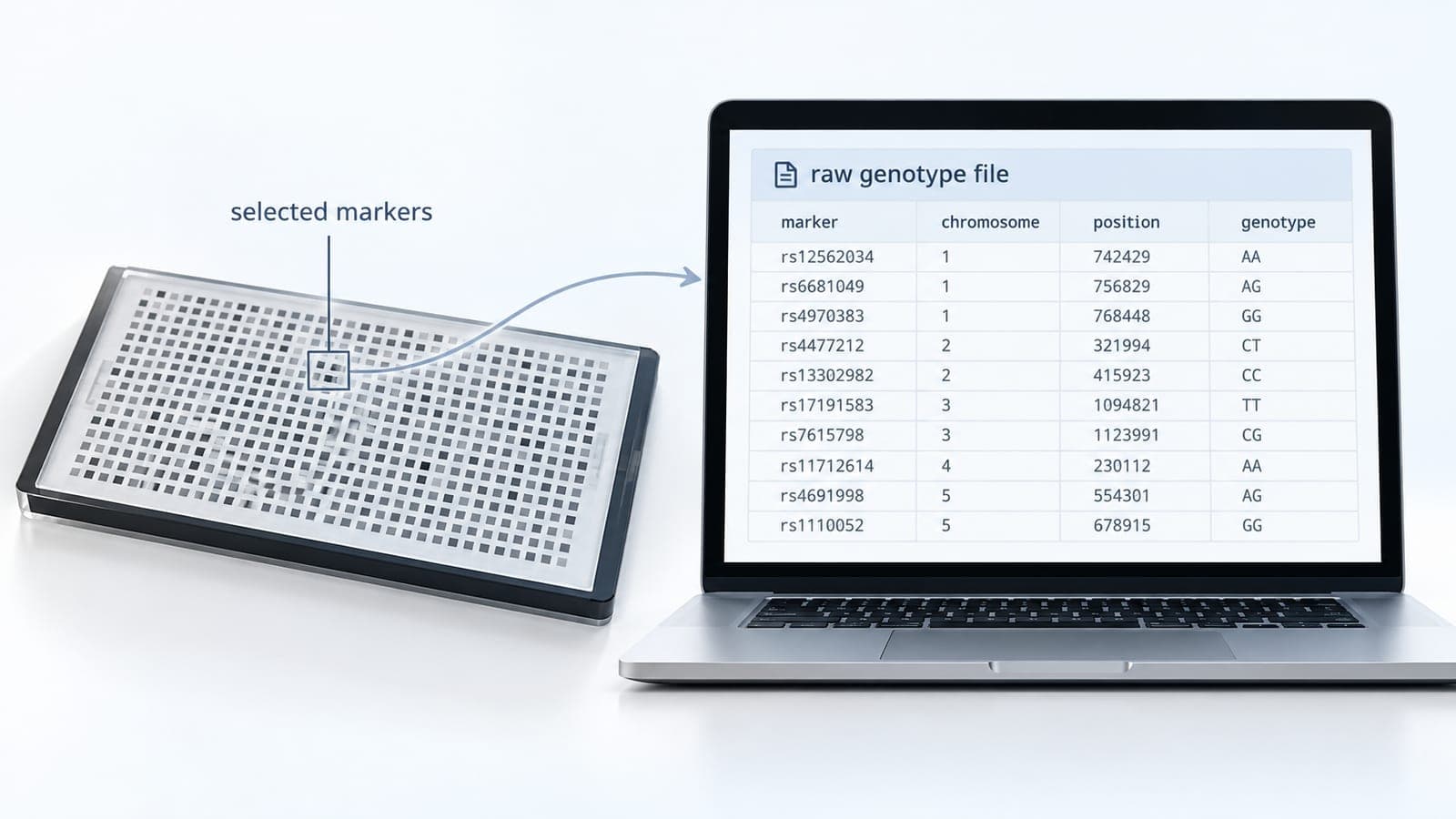
A SNP microarray measures selected genetic markers, then reports genotype calls for those markers in a file or report. It is useful for many ancestry and raw-DNA workflows, but it is not the same as whole-genome sequencing or a clinical diagnosis. A raw DNA interpretation can explain the measured rows; it cannot create results for markers the array did not test.
If you already have a 23andMe, AncestryDNA, MyHeritage or similar download, the key question is scope. The file may contain hundreds of thousands of marker rows, but each row still comes from a designed array and quality pipeline. Before interpreting a result, separate the marker label, chromosome position, genotype letters, reference build and health claim.
Evidence checked October 13, 2026. This article explains the technology boundary for existing raw DNA files; it is not medical advice or a substitute for clinical testing.
What is a SNP microarray?
A single nucleotide polymorphism, or SNP, is a one-letter DNA difference found at a specific position. MedlinePlus Genetics describes SNPs as the most common type of genetic variation among people and notes that scientists use them as markers when studying genes and traits.
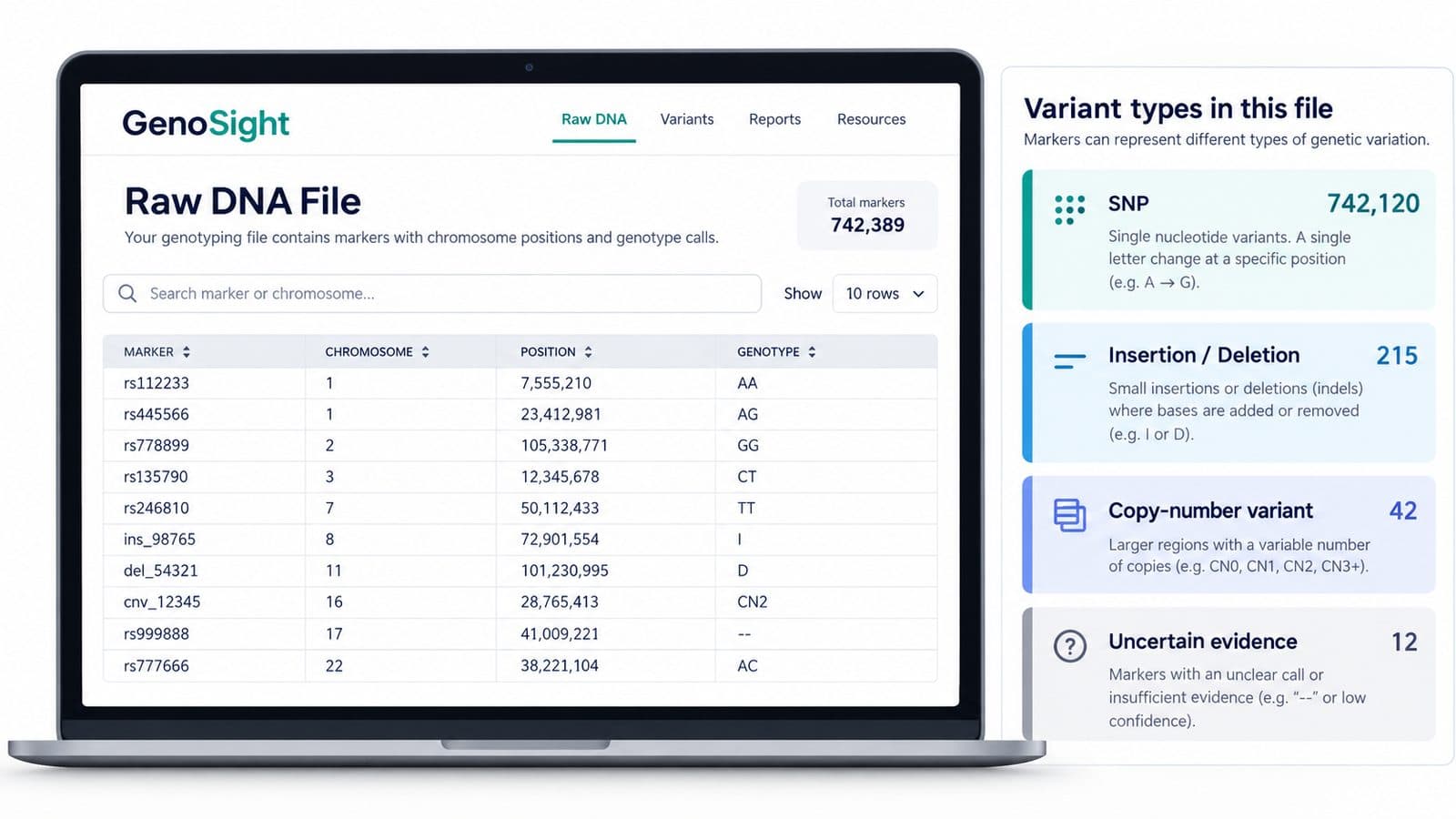
A SNP microarray is a laboratory platform designed around many selected markers. The array contains probes for positions chosen by the test developer. When a DNA sample is processed, the platform estimates which allele or genotype is present at each included marker. The resulting data can then be turned into a table with fields such as marker ID, chromosome, position and genotype.
That table can feel comprehensive because it is large. It is still a selected-marker result. A marker that is absent from the array, filtered out by quality control or not included in the downloadable file has not become a directly measured result because a later website discusses it.
How does an array become a raw DNA file?
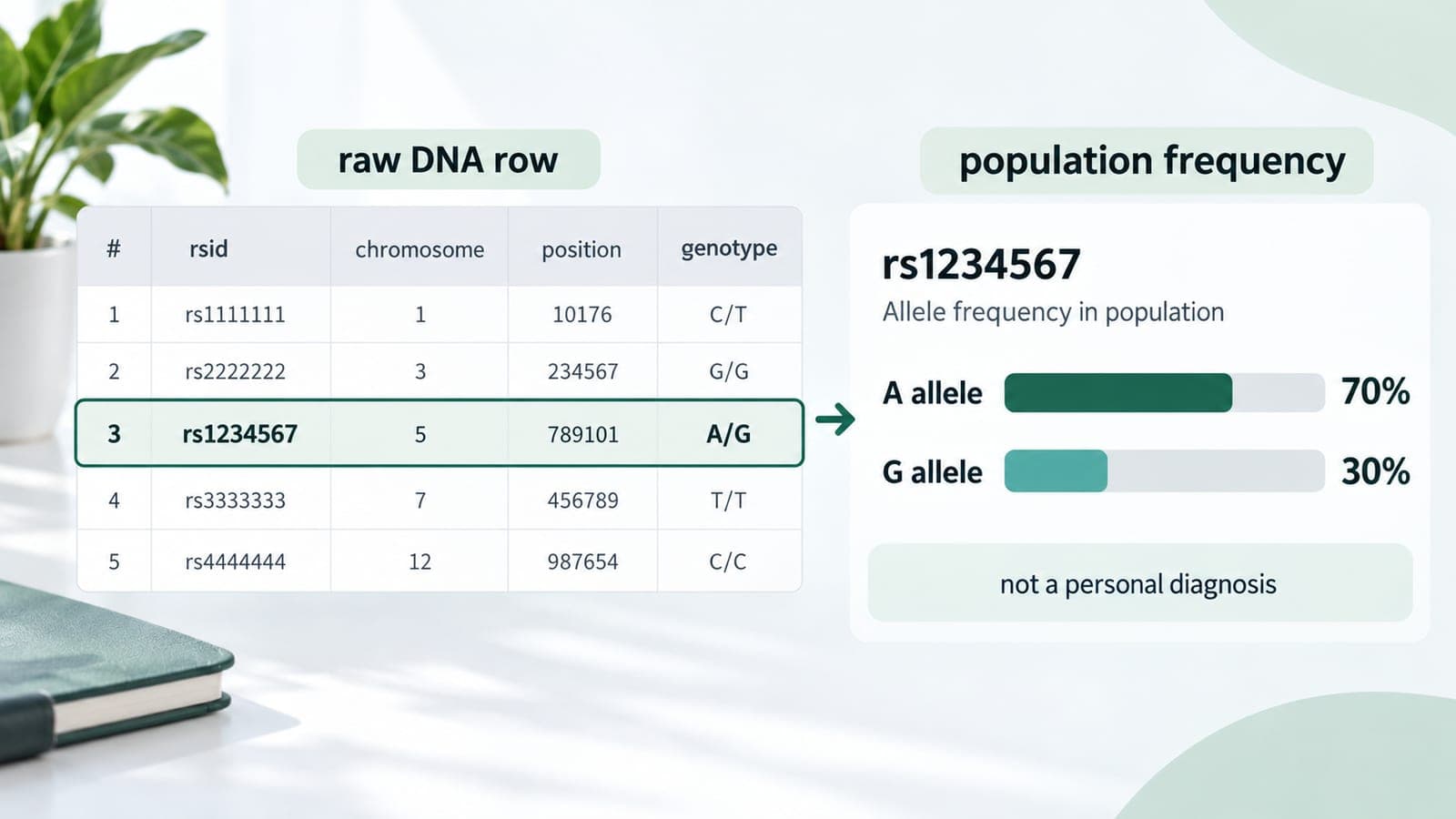
Many consumer raw DNA files are easiest to understand as selected marker exports. A row might identify a marker, give a chromosome and position on a stated reference build, and list two allele letters. Our rsID meaning guide explains why the marker label and the genotype call are separate pieces of information.
The array design and the export format both matter. A provider can test one set of markers, update a chip design, or expose only part of its internal data to the consumer download. The same person can therefore have files from different platforms with overlapping but non-identical marker lists.
For interpretation, keep the original file and header rather than copying rows into a spreadsheet by hand. Record the provider, download date, reference build if stated, marker ID, position and genotype. If an upload service accepts the file, that only proves the software could parse it; it does not prove every question you ask is supported by directly measured data.
What can a SNP microarray show?
At the consumer-file level, a SNP microarray can show reported genotype calls at selected positions. That can support educational explanations of marker labels, allele letters, genotype categories, ancestry-informative markers and some evidence-backed trait or health associations when the relevant marker is actually present and the interpretation is appropriately limited.
Some SNP-array workflows are more complex than a simple consumer raw-data table. The Greenwood Genetic Center's SNP Microarray Interpretation Guide describes clinical-style array interpretation patterns such as copy-number changes, loss of heterozygosity and mosaic situations. That guide also warns that idealized patterns do not replace proper training and platform-specific analysis.
That distinction matters for a GenoSight user. A consumer raw DNA explanation should not pretend to perform clinical cytogenetic interpretation. It can help you understand what a reported marker row means, how it relates to cited evidence, and which uncertainty remains before any clinical decision.
What are the main limits?
A SNP microarray does not read every base in the genome. It checks the markers chosen for that platform. CD Genomics describes SNP microarrays as high-density arrays with up to millions of probes, used to detect many SNPs in one reaction. That is a large targeted design, not unrestricted sequencing.
Direct-to-consumer testing also has interpretation limits. The FDA's direct-to-consumer testing overview describes authorized genetic health risk tests as qualitative genotyping systems for specific variants and intended uses. MedlinePlus separately notes that direct-to-consumer genetic tests may examine only some of the variants related to a disease or trait.
These limits do not make the file useless. They make the file conditional. A reported marker can be useful when the marker is present, the reference details are clear, the evidence is current and the claim stays within the test's scope. A missing marker, rare variant claim, or clinical concern needs more caution.
How should you check a raw file before interpreting it?
Start with the file's provenance. Our raw DNA download guide covers how to retrieve the original export from major consumer providers. Once you have it, review five details before trusting an interpretation:
- Provider or laboratory source.
- Download date and chip or platform details if available.
- Reference build and strand conventions if stated.
- Exact marker ID, chromosome, position and genotype.
- Whether the receiving report uses directly measured data, imputation, or a general educational note.
If two tools disagree, do not assume one is wrong from the allele letters alone. Strand orientation, reference build, marker naming and file parsing can all change how a row appears. Our DNA strand orientation guide and GRCh37 vs GRCh38 guide explain two common technical checks.
What can GenoSight do with this file?
GenoSight can organize an uploaded raw DNA file into educational report sections, connect findings to cited sources, show limitations and keep the interpretation tied to the rows available in the file. It does not perform a new laboratory test, convert an array into sequencing data or diagnose a condition.
That makes the useful next step practical: inspect the sample output before uploading, and decide whether an educational explanation is enough for your question. For a clinically important concern, bring the original result and your question to a qualified healthcare professional or genetics clinic.
See a sample report
Review how GenoSight explains existing raw DNA rows before deciding whether to upload your file.