snps explained
Genotype Imputation: What a Predicted DNA Result Means
Learn what genotype imputation estimates from a reference panel, why it differs from a measured raw DNA call, and when not to treat it as confirmation.
Sebastian Thorp · November 7, 2026 · 4 min read
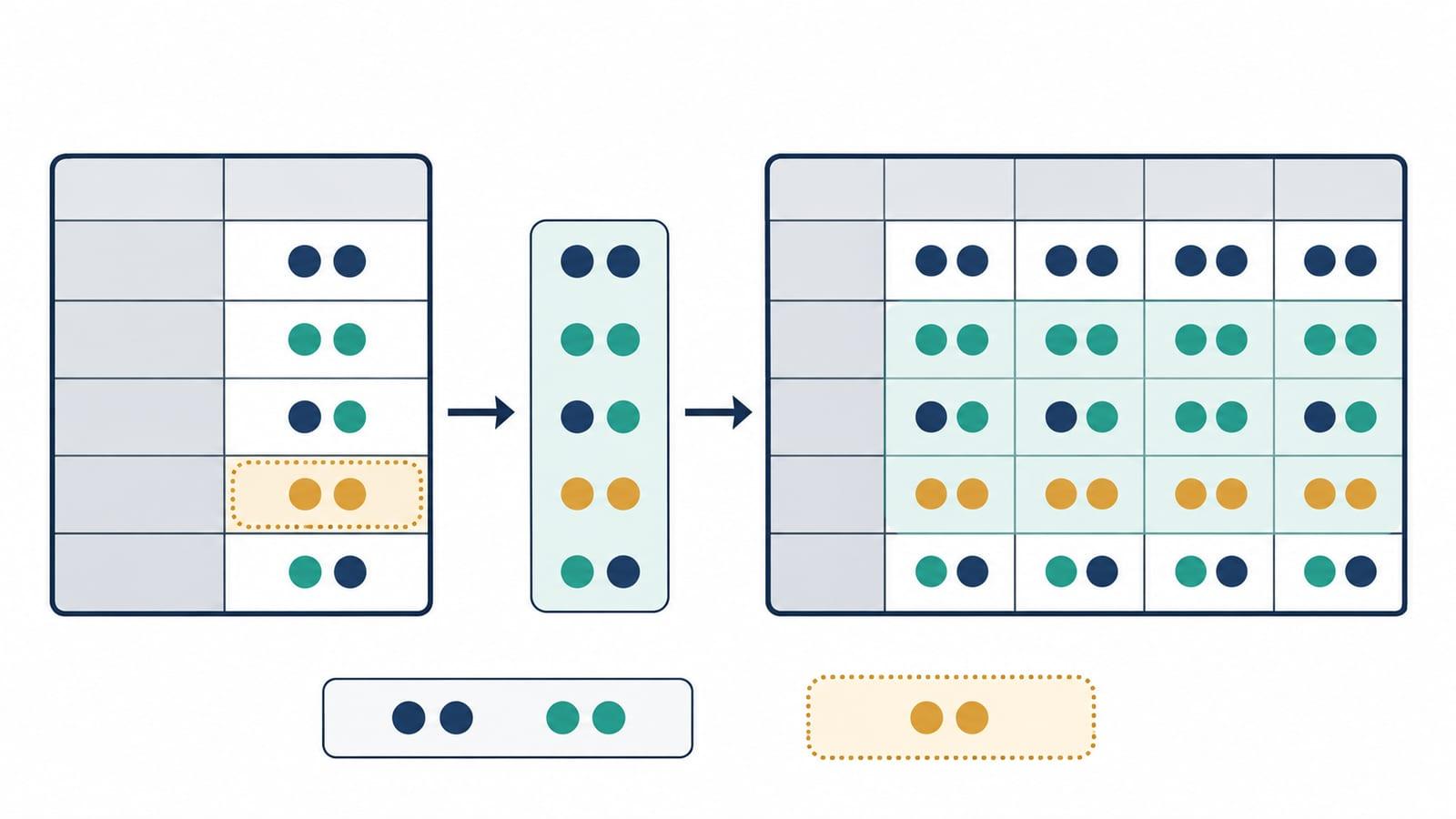
Genotype imputation is a statistical estimate of a DNA result that was not directly measured. It uses nearby measured markers and a reference panel of known haplotypes to predict a likely genotype, so an imputed result is not the same thing as a laboratory call in a raw DNA file.
Imputation is useful in genetic research, especially when studies used different arrays. It needs extra care in personal interpretation because its accuracy depends on the original data, the reference panel, the variant, and the population context.
What genotype imputation does
Consumer genotyping arrays measure a selected set of markers rather than every genomic position. In research, imputation uses patterns of nearby variants that tend to be inherited together to estimate a marker that the array did not directly test.
The 2024 review, Genotype imputation in human genomic studies, describes the basic workflow: quality-control the observed data, phase it, compare it with a more complete reference panel, impute unobserved variants, and then assess quality. A result can be represented as a probability or dosage rather than a certain two-letter call.
That workflow is valuable for combining large research datasets. It does not mean that a consumer file suddenly contains a measured result at every predicted position.
Measured, missing, and imputed are different labels
Keep these three categories separate before acting on a genetic claim:
| Label | What it means | What to check |
|---|---|---|
| Measured genotype | The testing method reported a call at that marker. | Provider, chip version, marker ID, build, and quality information. |
| Missing or no-call | The file has no usable call at that marker. | Whether the marker was absent, failed quality control, or uses another coordinate system. |
| Imputed genotype | Software estimated a likely value from observed markers and a reference panel. | The method, reference panel, reported confidence, and whether confirmation is needed. |
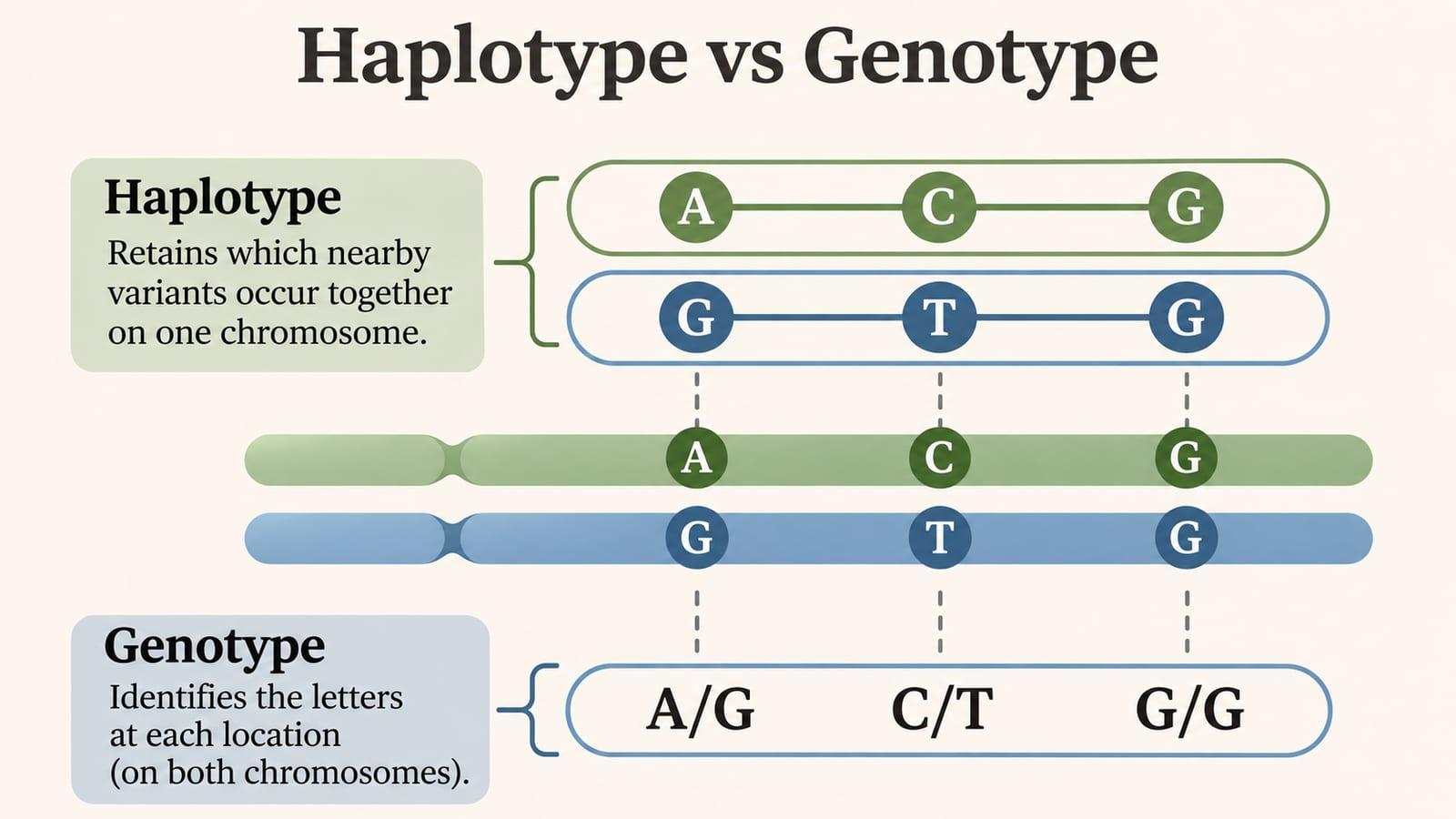
Nearby markers can be informative because parts of a chromosome are often inherited together. But a pattern in a reference panel is not a direct observation of one person's unmeasured DNA. The International HapMap Project explains why shared marker patterns are useful for population studies; that same idea supports many imputation methods.
Why reference panels and ancestry matter
Imputation quality is not one fixed percentage. It can change with the marker frequency, the density and quality of the original array, phasing, and how well the reference panel represents the person's genetic background.
The review Genotype Imputation from Large Reference Panels notes that larger panels can improve accuracy when the panel remains genetically relevant to the study sample. It also explains that rare variants and new variants are harder problems for imputation. A 2024 study of more than 43,000 people across 123 populations found meaningful differences in imputation accuracy across populations, particularly where reference data were less representative (Cahoon et al.).
Those limits matter when an online service presents a predicted marker as if it were a complete personal result. A high-level confidence score is method-specific. It cannot turn an unmeasured or uncertain prediction into clinical confirmation.
What this means for a consumer raw DNA file
First read the original raw file as a record of the markers the provider actually reported. Consumer data can vary by company, chip generation, processing pipeline, and available quality information. A survey of direct-to-consumer genotype data describes those differences and the difficulty of reconstructing provider-side quality controls from a downloaded file (GenomePrep survey).
Then ask a service a plain question: is this marker directly measured, or was it inferred? If it was inferred, ask which reference panel and quality metric were used, whether the data leaves the device or account, and what the result should not be used for. Do not upload a full raw DNA file to an unfamiliar service merely to fill a missing marker without reviewing its privacy terms.
GenoSight explains supported marker-level findings from compatible raw DNA files in an educational context. GenoSight does not present an imputed call as a diagnostic result or as a substitute for a test ordered and interpreted for a medical decision.
When a predicted result needs confirmation
An imputed research value may be perfectly suitable for a statistical analysis. It is a different standard from deciding about medication, pregnancy, carrier status, disease risk, or a diagnosis. If a result could affect healthcare, discuss the original report and an appropriate confirmatory test with a qualified clinician or genetics professional.
For everyday raw-file reading, start with the marker ID, genome build, reported genotype, source, and evidence behind the claim. The guide to rsID meaning explains why a marker label and its reported genotype are separate facts; haplotype versus genotype explains why nearby markers can require phase information as well.
Read the DNA markers your file actually reports
Upload a compatible raw DNA file to see educational findings with citations, clear caveats, and no promise that inferred data is a diagnosis.
Sources checked November 7, 2026
- Berdnikova and Elgaeva: Genotype imputation in human genomic studies.
- Das et al.: Genotype Imputation from Large Reference Panels.
- Cahoon et al.: Imputation accuracy across global human populations.
- Quick et al.: A survey of direct-to-consumer genotype data and quality control.