clinical genetics
Penetrance vs Expressivity: The Difference
Learn how genetic penetrance differs from variable expressivity, why both depend on context, and what a consumer raw DNA file cannot tell you alone.
Sebastian Thorp · October 20, 2026 · 4 min read
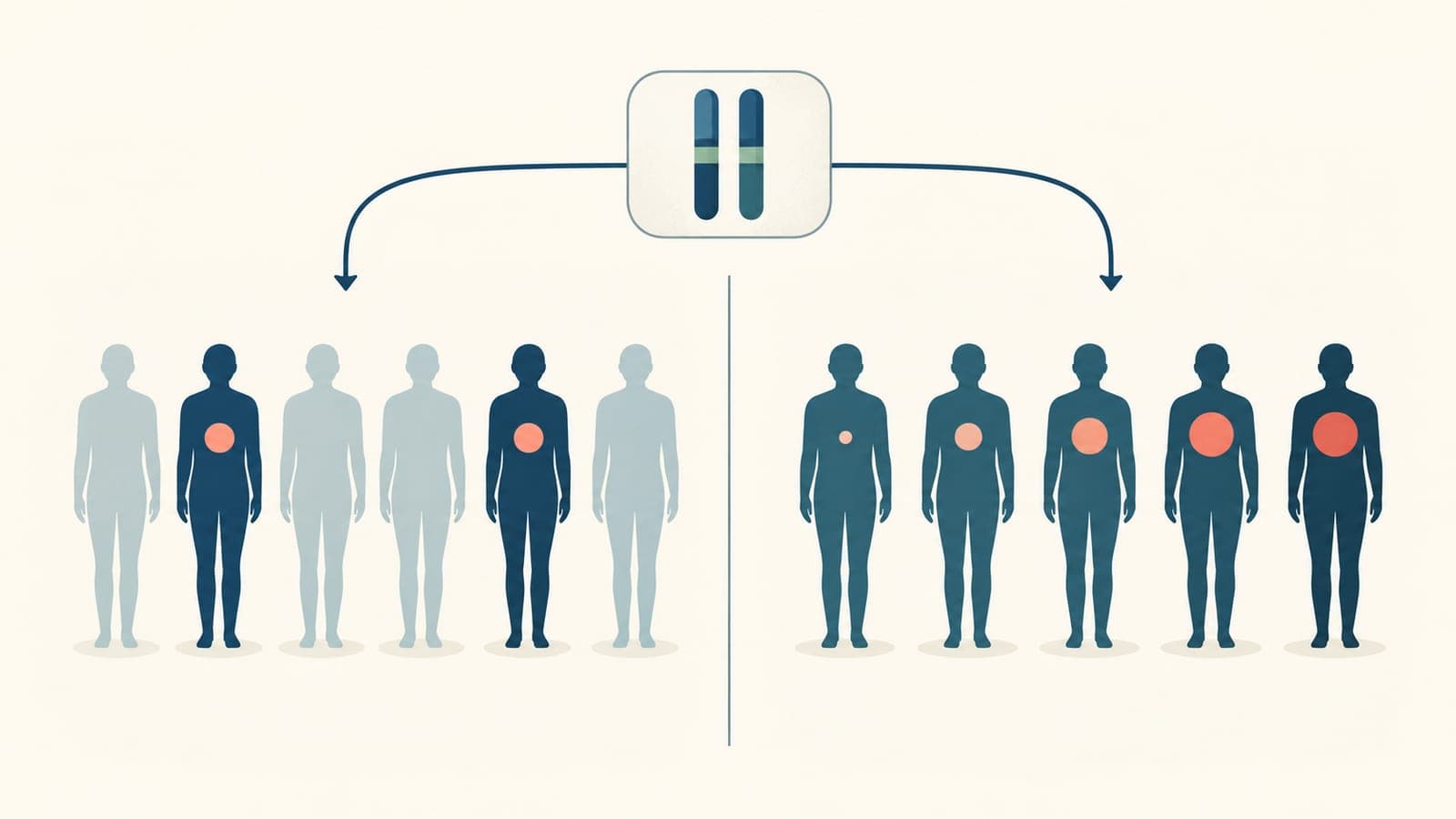
Genetic penetrance and variable expressivity answer different questions. Penetrance asks whether people with a particular genotype show an associated trait at all; expressivity asks how features vary among people who do show it. A consumer raw DNA file may show a selected genotype call, but it cannot calculate either concept for one person by itself.
Evidence checked October 20, 2026. This guide is educational, does not diagnose disease or estimate a personal risk percentage, and cannot replace clinical genetic counseling.
Penetrance asks whether a trait appears
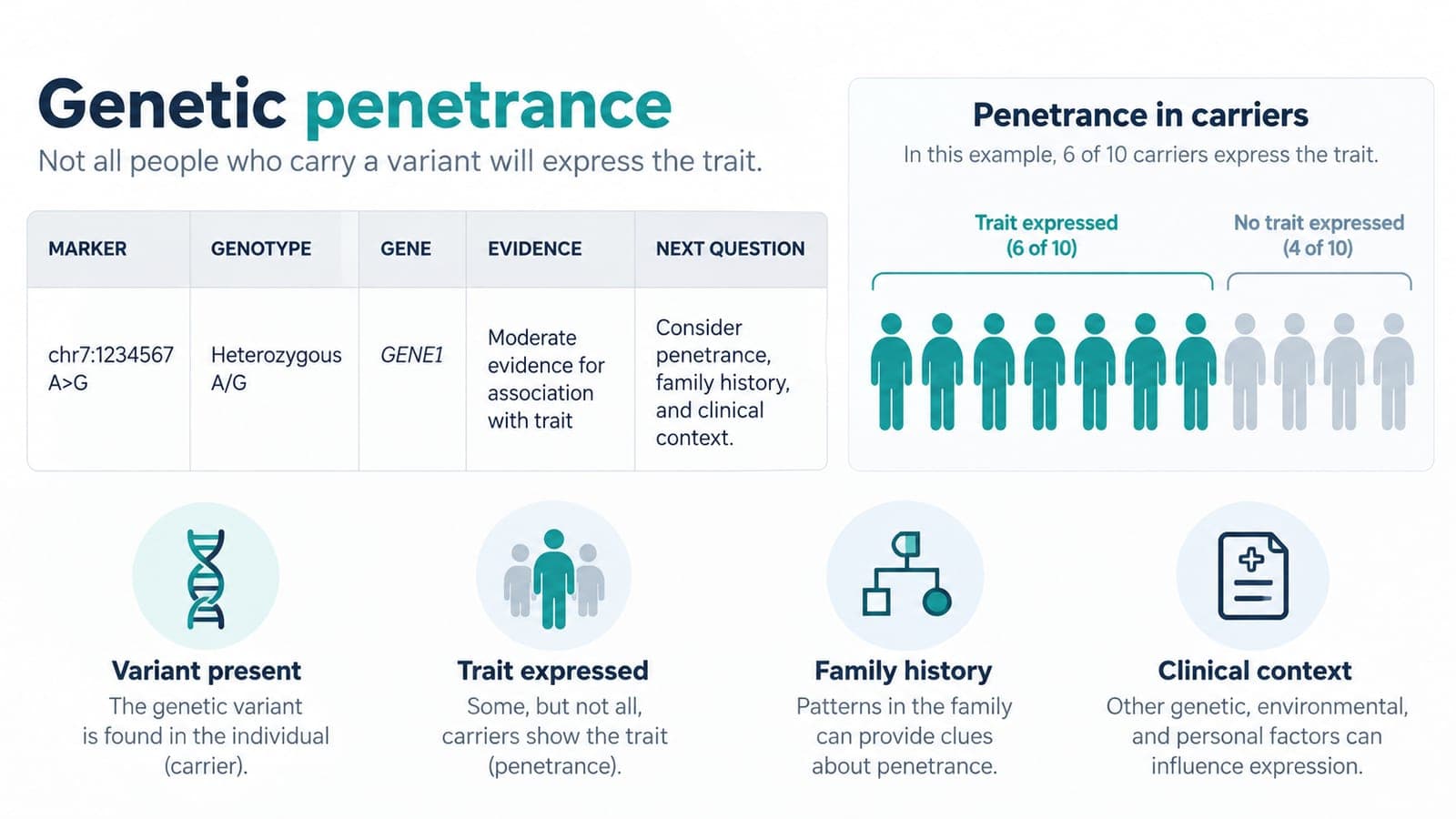
Penetrance is a population-level proportion. In a defined group of people with a genotype or variant, it describes how many show the associated trait or condition. MedlinePlus Genetics calls this reduced penetrance when some people with a disease-causing variant do not show signs and symptoms of the disorder.
That is a different claim from “this person will get the condition.” A penetrance estimate belongs to an exact variant or genotype, an exact outcome, a studied population, and a time frame. Age, sex, other genes, environment, study design, and how a condition is defined can all matter. A source that does not identify those details should not be compressed into a personal prediction.
Expressivity asks how features vary
Variable expressivity starts with people who express an associated trait or condition. It describes differences in the signs, symptoms, or severity among those people. One person can have a mild feature while another has a more noticeable feature, even when the underlying genetic finding is related.
The two concepts are easy to merge because both describe why a genotype does not produce one identical outcome in every person. They still need to stay separate:
| Question | Penetrance | Variable expressivity |
|---|---|---|
| Core question | Does the associated trait appear at all? | How do features vary among people who show it? |
| Population framing | Proportion of people with a genotype who show the trait | Range of features among affected people |
| Common overread | “The variant guarantees an outcome.” | “Everyone with the variant has the same severity.” |
| What it cannot decide alone | Your diagnosis or personal risk | Your future symptoms or severity |
The NCBI Bookshelf overview of genetic variation and phenotype describes penetrance and expressivity as separate reasons that a genotype-to-phenotype relationship can be complex. A PubMed-indexed review discusses modifier genes, sex, and environmental factors among the mechanisms that can contribute to that complexity.
Why a raw DNA row is not a personal estimate
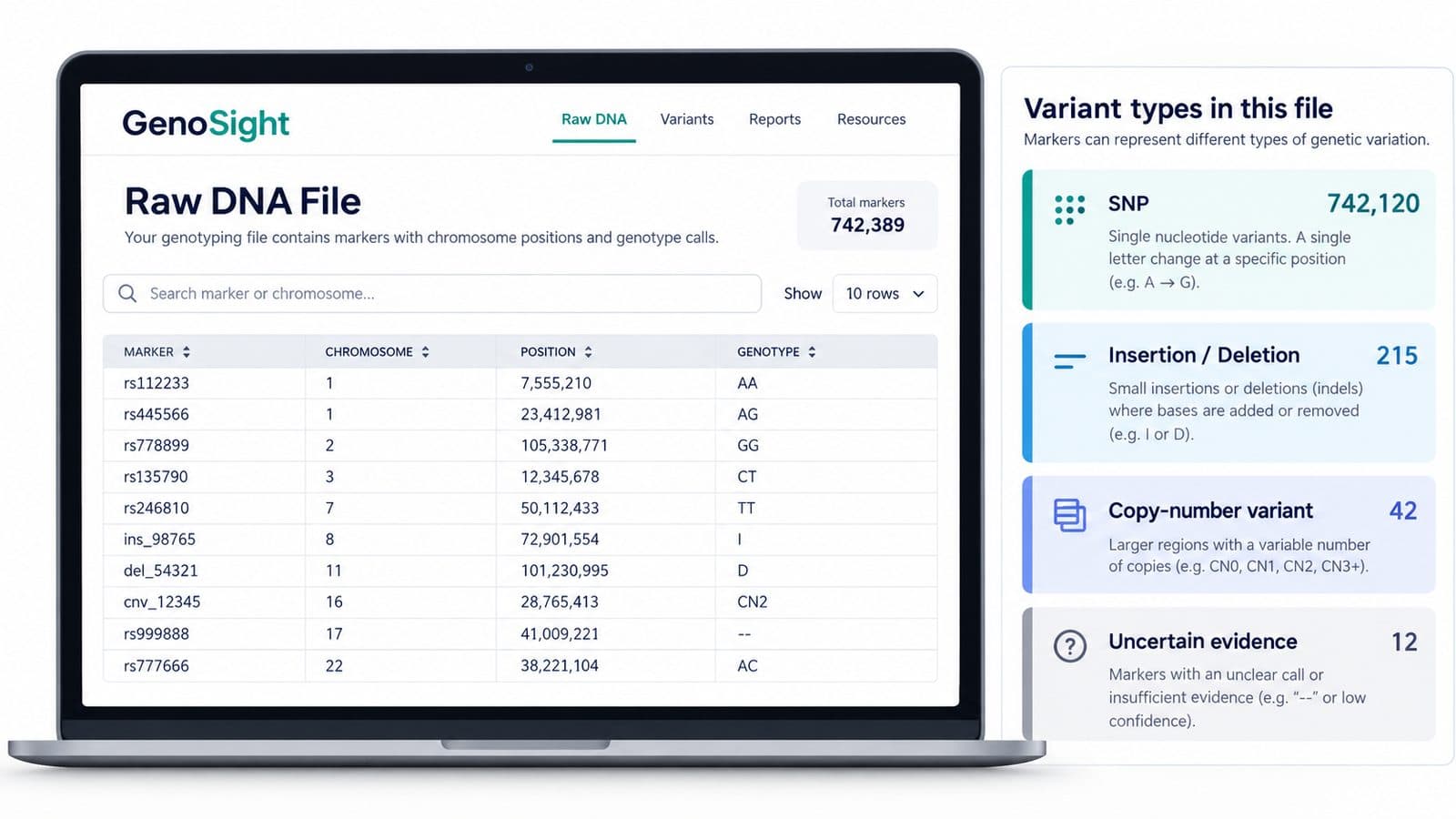
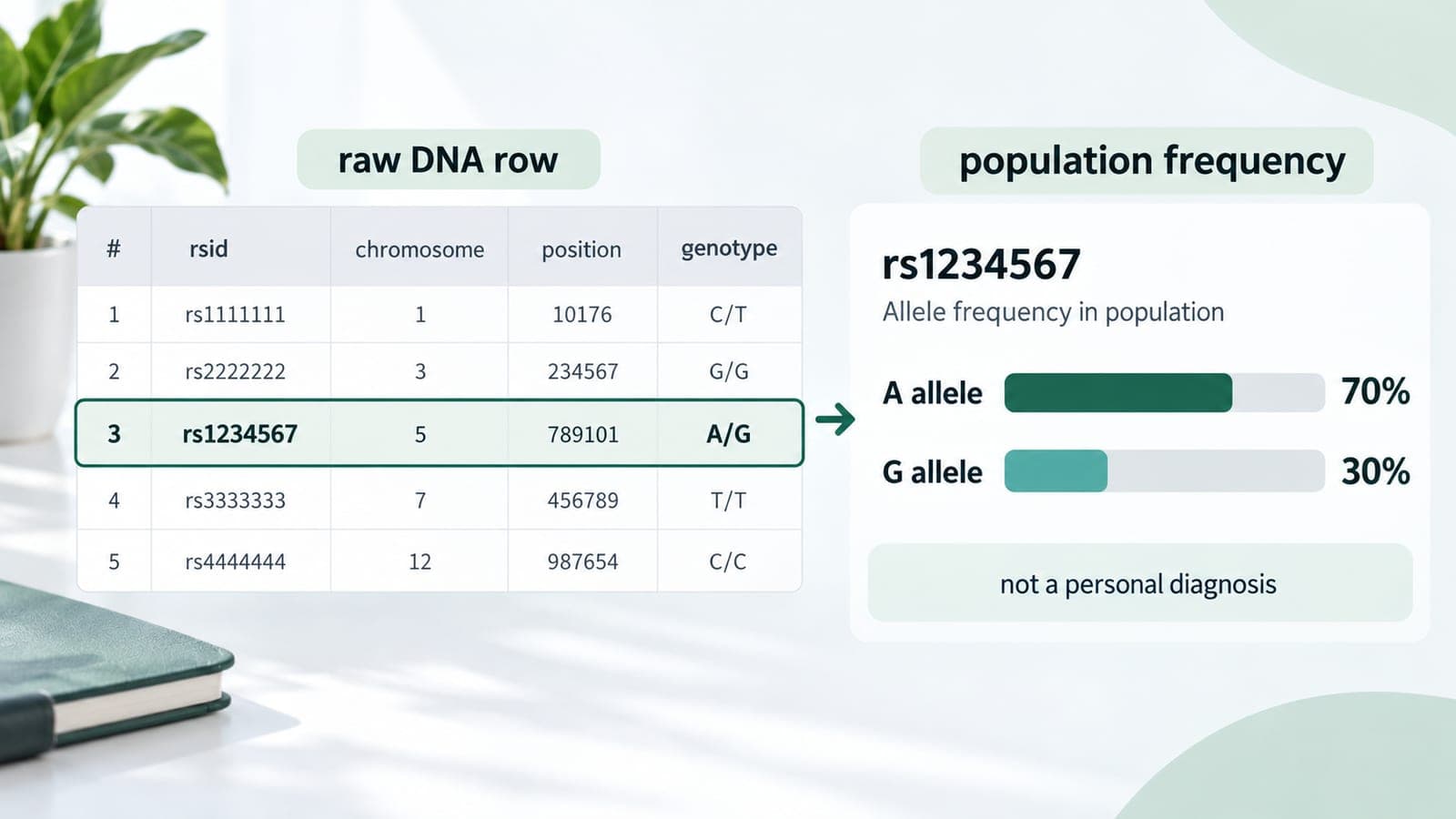
A consumer raw DNA file usually lists selected marker calls. A row can contain an rsID, chromosome, position, and genotype letters. That can be useful context, but it is not a clinical interpretation and it does not show whether a trait will appear.
| Evidence layer | What it can contribute | What it cannot establish alone |
|---|---|---|
| Consumer raw DNA row | A reported marker and genotype | Whether the marker is clinically meaningful or fully measured |
| Variant evidence | What a source says about an exact variant-condition relationship | Whether the evidence fits your health history |
| Penetrance study | How often a defined group showed a trait | A diagnosis or individual prediction |
| Expressivity evidence | How features varied in a defined group | Your future severity or care plan |
The ClinGen Variant Curation guidance describes structured evidence review for clinical variant interpretation. A search result, a screenshot, or a consumer-chip row is not a substitute for that review. Our genetic variants guide explains the difference between a marker, a genotype, a variant claim, and a clinical interpretation; our genotyping versus sequencing guide explains why a consumer array is not a complete genome test.
A safer way to review a claim
If a DNA search result mentions penetrance or expressivity, keep the evidence trail intact before treating it as relevant:
- Preserve the original row. Save the provider, file date, marker ID, chromosome, position, reference build, and genotype together.
- Name the exact claim. Is the source defining a concept, describing an association, classifying a variant, or recommending clinical action?
- Match the variant and condition. A penetrance statement is not transferable from one variant or condition to another just because the gene name is shared.
- Read the study setting. Record the population, age range, ascertainment method, outcome definition, and evidence date when they are available.
- Separate the questions. First ask whether the source is about whether a trait appears. Then ask whether it is about the range of features among people who show it.
- Use clinical follow-up for clinical decisions. Do not change medication, screening, supplements, or pregnancy care from a raw-file lookup alone.
The practical distinction for raw DNA users
Penetrance is about whether an associated trait appears in a defined group. Expressivity is about how features vary among people who show the trait. Neither concept turns a consumer raw DNA result into a diagnosis, prognosis, or treatment instruction.
If a genetic result could affect health care, bring the exact marker or variant, the source, the condition named by the source, and your questions to a qualified clinician or genetic counselor. Keeping that context is more useful than trying to turn a single genotype row into certainty.
Read raw DNA findings with their limits
GenoSight turns compatible raw DNA files into educational reports that keep genotype calls, sources, uncertainty, and follow-up questions separate.
Sources
- MedlinePlus Genetics - What are reduced penetrance and variable expressivity?, accessed October 20, 2026.
- NCBI Bookshelf - Understanding Genetic Variance and Phenotype Expression, accessed October 20, 2026.
- Zlotogora - Penetrance and expressivity in the molecular age, accessed October 20, 2026.
- ClinGen - Variant Classification Guidance, accessed October 20, 2026.