privacy
Browser-Only vs Hosted Raw DNA Analysis: Privacy Trade-offs
A practical comparison of local browser-only raw DNA analysis and hosted report tools: what each protects, what each enables, and how to choose.
Sebastian Thorp · May 29, 2026 · 4 min read

In short
Browser-only raw DNA tools are excellent when your top priority is keeping the raw file on your device. Hosted tools are a better fit when you want saved reports, PDFs, account deletion/export, and follow-up analysis across sessions. The privacy question is not "which architecture is always safe?" It is "which risks are you accepting, and what value do you get back?"
People looking for a Promethease alternative often run into the same fork in the road:
- A browser-only tool parses your 23andMe, AncestryDNA, or MyHeritage file locally in the page.
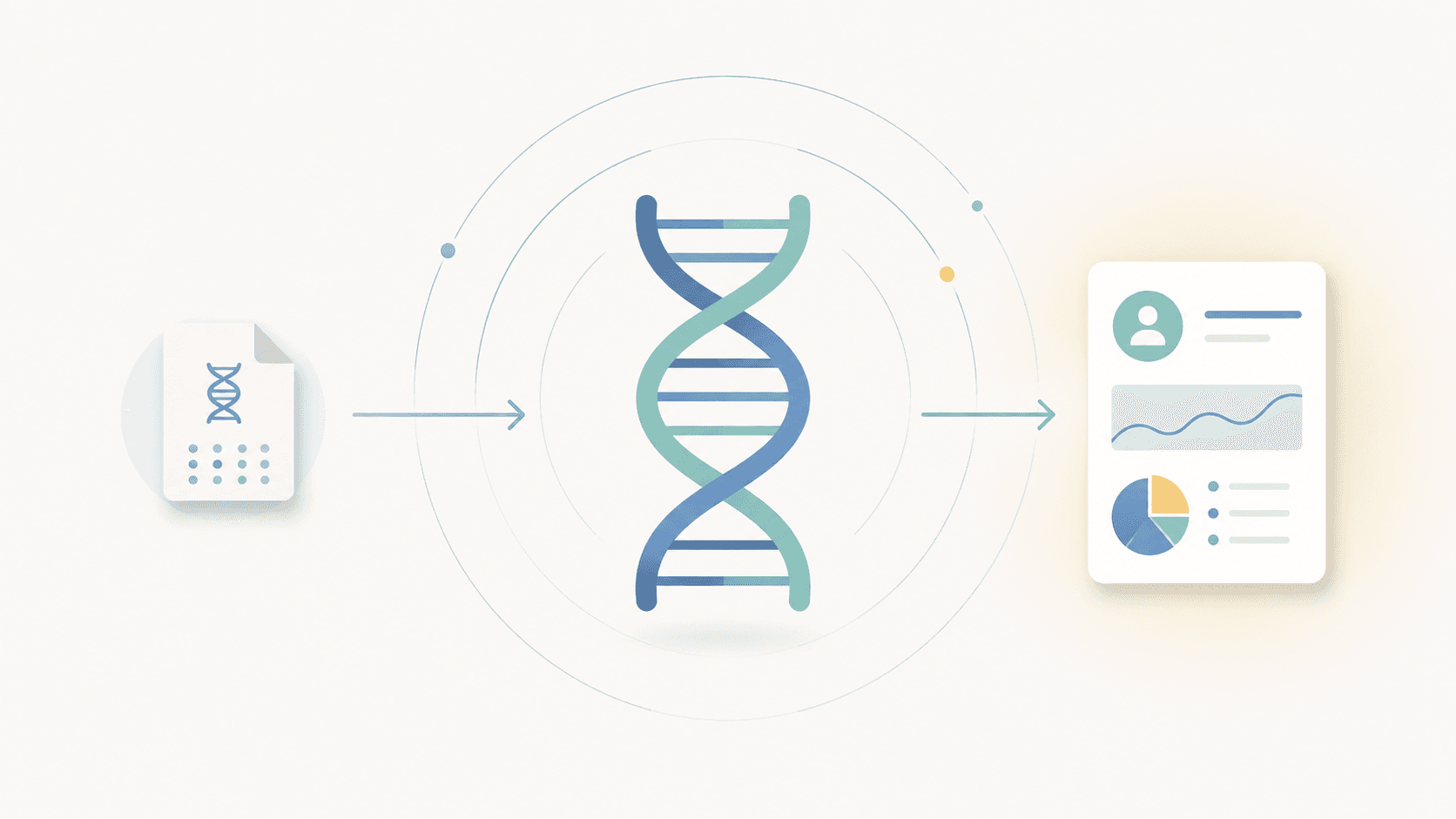
- A hosted tool uploads the file to an account and does analysis on the server.
Both can be reasonable. Both can be implemented badly. The right choice depends on what you need from the report and how much persistence you want after the first upload.
What browser-only protects well
The biggest advantage is obvious: the raw genotype file can stay on your device. If the site is built honestly and does not send the file elsewhere, there is no long-term raw-file copy sitting in the vendor's database.
That matters because raw DNA data is unusually durable personal data. You can change a password, cancel a credit card, or move house. You cannot rotate your genome.
Browser-only tools also tend to be fast for simple lookups. A static evidence database can be downloaded once, matched locally, and rendered immediately. If your goal is "show me which SNPs in this file match this evidence pack," local-first is a natural architecture.
What browser-only does not automatically solve
"Runs in your browser" is not the same as "zero privacy risk."
You still have to trust the code delivered to the browser. Unless you inspect and pin the exact source, the page can change between visits. You also have to trust your own device environment: browser extensions, malware, shared machines, and download folders all matter.
If the tool includes AI summaries, check the boundary carefully. A local parser may still send selected findings, profile notes, or report text to an AI provider. That can be a good compromise, but it should be stated plainly.
Finally, local-only storage can be fragile. If reports live only in browser storage or downloaded files, clearing site data, changing devices, or using private browsing can lose the work.
What hosted tools enable
Hosted analysis is useful when the product is more than a one-time lookup table.
A hosted raw DNA report tool can:
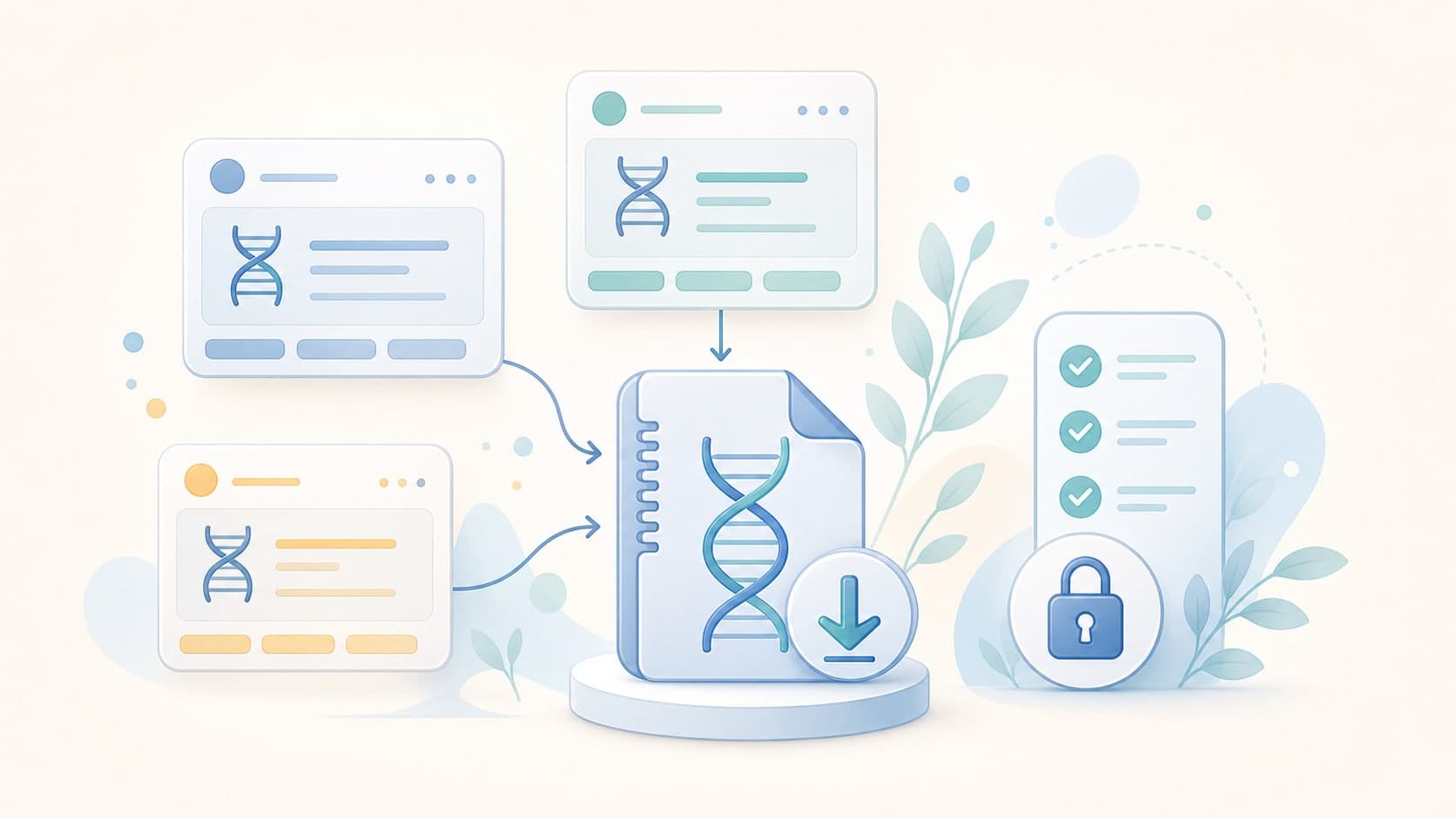
- Save your report library under an account.
- Regenerate a report when the evidence pack changes.
- Produce PDFs without making you re-upload every time.
- Let you ask findings-grounded follow-up questions later.
- Provide account-level deletion and export workflows.
- Run heavier analysis that would be slow or awkward in browser memory.
Those are real conveniences. They also come with a real responsibility: the vendor must explain what is stored, what is encrypted, what is sent to AI providers, what is logged, and how deletion works.
The most important questions to ask
Before uploading a raw DNA file anywhere, ask these five questions.
| Question | Why it matters |
|---|---|
| Is the raw genotype file uploaded or kept local? | This is the biggest architecture split. |
| If AI is used, what exactly is sent to the model? | Raw file, selected findings, and profile notes are different risk levels. |
| Is the file stored after analysis? | Temporary processing and account persistence have different trade-offs. |
| Can I delete my file and account data? | Deletion should be a product workflow, not a support negotiation. |
| Is my data sold, shared for research, or used for ads? | Genetic data should never be quietly monetized outside the report product. |
If the answers are missing or vague, treat that as part of the answer.
Where GenoSight sits
GenoSight is not a browser-only tool. It is a hosted educational report product.
That means the raw file uploads to your account so the product can save report state, generate PDFs, and support follow-up chat. The sensitive boundary is different from local-first tools: GenoSight does not send the raw genotype file to the LLM. The analysis engine extracts structured findings first, and the AI synthesis step receives those findings plus your profile context.
GenoSight also keeps the clinical boundary explicit. Consumer raw DNA files are not medical confirmation. Reports are educational and should not be used for diagnosis, prescribing, screening, or treatment decisions without a qualified clinician.
For the full implementation details, see how GenoSight handles raw DNA data. For the product-level comparison, see GenoSight as a Promethease alternative.
If you want to evaluate the hosted path before uploading, compare the free raw DNA analysis trial, the raw DNA health report menu, the pricing and free credits page, and the raw DNA analysis cost guide.
Try a hosted report with no card
Upload a compatible 23andMe, AncestryDNA, or MyHeritage raw file and use 250 signup credits before deciding whether hosted synthesis is worth paying for.
If the hosted workflow is the right trade-off for you, choose monthly for 1,500 monthly credits, PDF exports, regenerations, and findings-grounded chat.
How to choose
Choose browser-only if:
- You mostly want a static variant lookup.
- You do not need saved reports across devices.
- Your main priority is avoiding raw-file storage on a vendor server.
Choose hosted if:
- You want reports saved under an account.
- You want PDFs, regeneration, and follow-up questions.
- You are comfortable with server-side storage when the boundaries are clearly documented.
Neither choice removes the need for judgment. Raw DNA analysis is useful as an educational layer, but the file is still personal, persistent data. Pick the tool whose architecture matches the job you actually need it to do.