snps explained
23andMe vs Independent DNA Analysis: What You Get
Compare 23andMe reports with independent raw DNA analysis: coverage, health-report limits, price logic, clinician handoff, and when a second look is worth it.
Sebastian Thorp · May 1, 2026 · 8 min read
In short
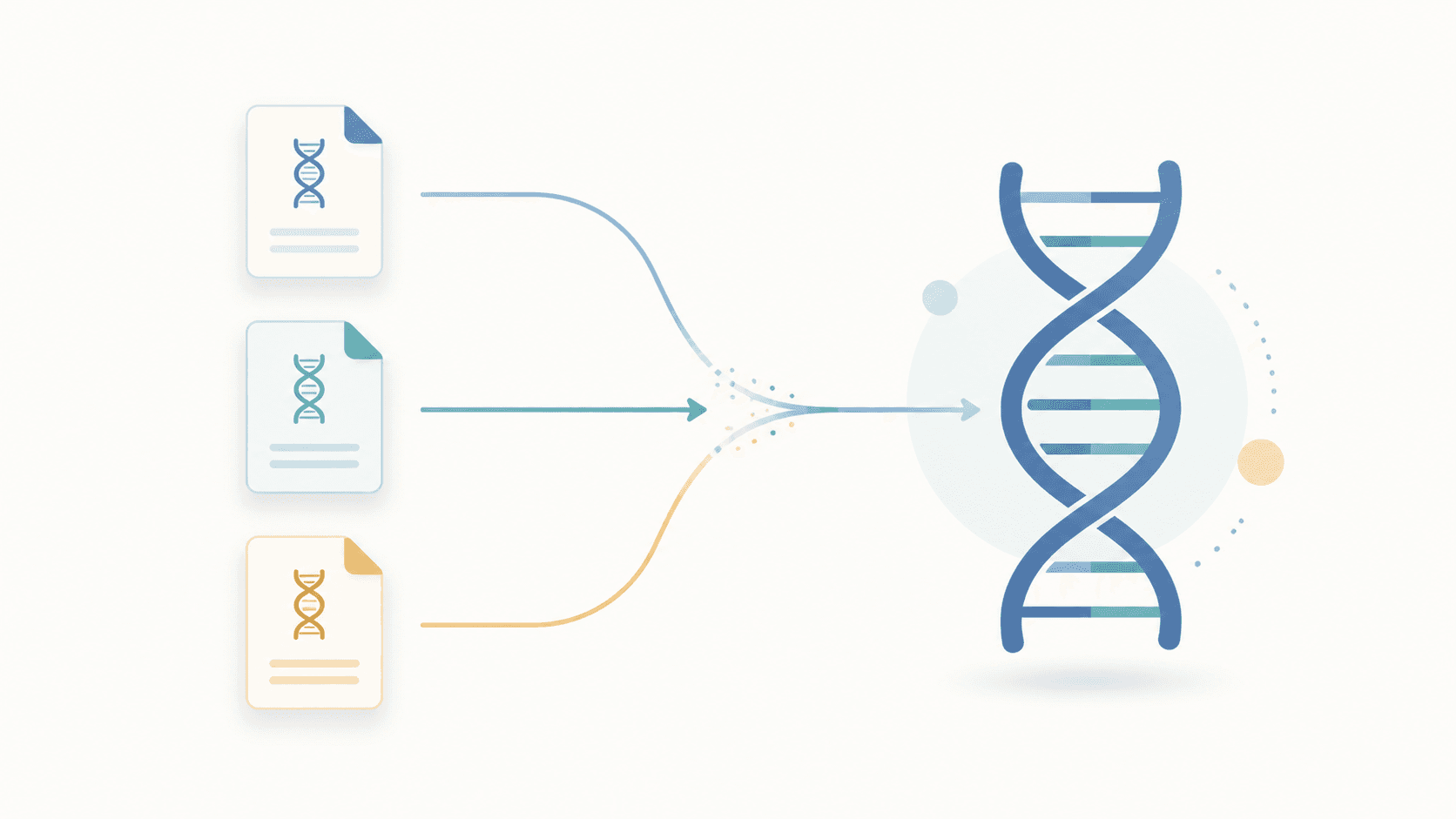
23andMe is best understood as a polished, curated consumer genetics report. Independent DNA analysis is a broader second pass over the raw genotype file you already paid for. The second pass can add useful context around nutrition, methylation, cardiovascular markers, medication-response research, and clinician handoff, but it does not turn a consumer-array file into a clinical diagnosis.
The practical difference
When people search "23andMe vs independent DNA analysis," they usually want one of three things:
- A clearer health report from a raw 23andMe file
- A cheaper next step before paying for whole-genome sequencing
- A way to bring genetic context to a clinician without handing over a giant raw-data file
Those are reasonable goals, but the comparison only makes sense if you separate the report from the raw data.
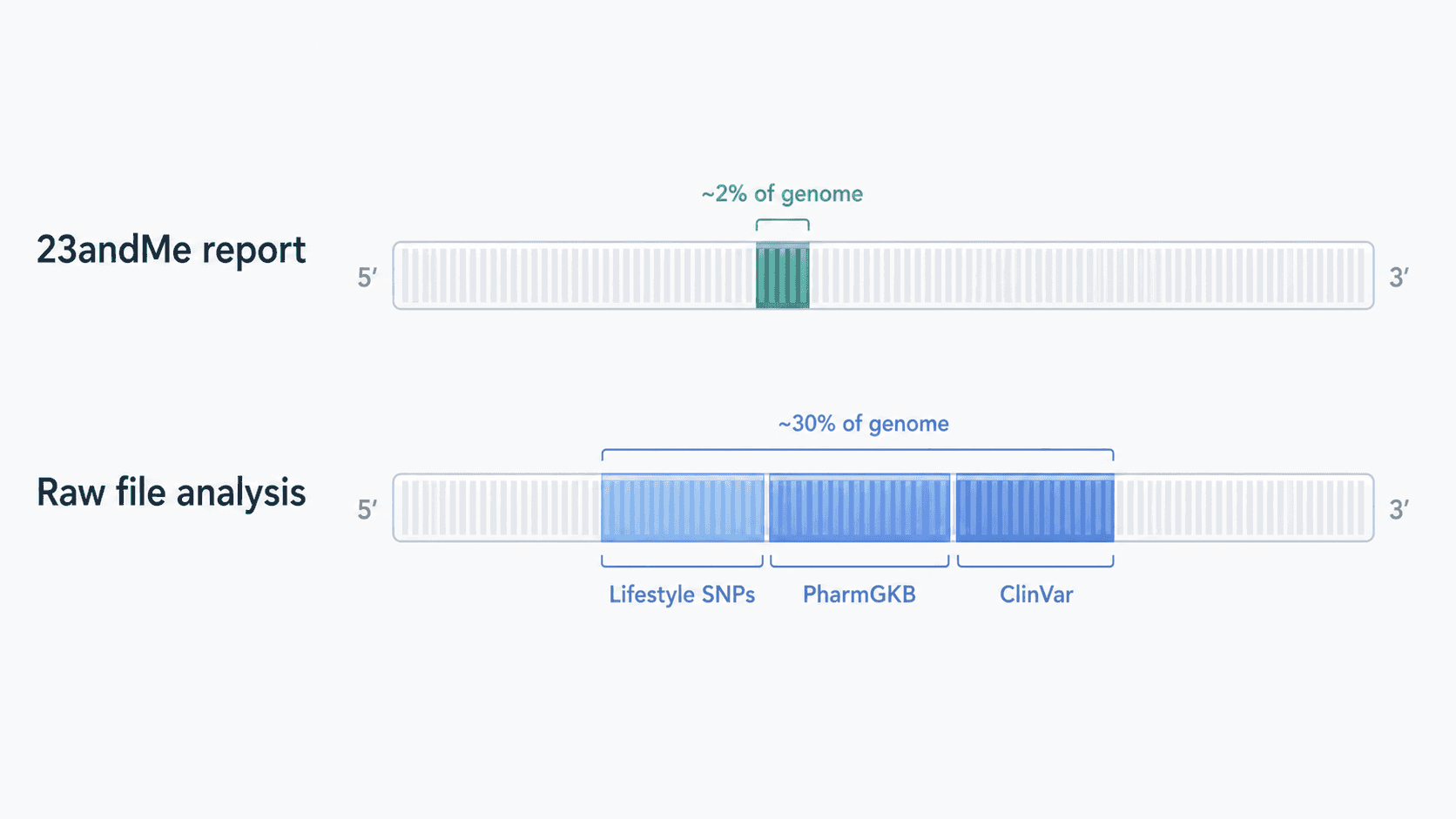
23andMe's report is a curated product. It summarizes ancestry, relatives, traits, wellness, carrier status, and selected health predisposition topics. Some Genetic Health Risk reports meet FDA requirements, while other health-predisposition reports are based on 23andMe research rather than FDA review. 23andMe also states that these reports do not cover a user's entire genetic profile.
The raw data file is different. 23andMe's own raw-data documentation describes it as uninterpreted genotype data, including data not used in 23andMe reports, with only a subset of markers individually validated for accuracy. That is the useful opening for independent analysis: there is more signal in the file than the default report explains, but not all of it is reliable enough for action.
Useful source links:
- 23andMe: what health-related information can I learn?
- 23andMe: raw genotype data technical details
- 23andMe: accessing your raw genetic data
What 23andMe gives you
A 23andMe Health + Ancestry result is strongest when the question fits its curated report set:
| Need | 23andMe fit | Why |
|---|---|---|
| Ancestry composition | Strong | This is a core 23andMe product surface. |
| DNA relatives | Strong | Matching relatives is one of the clearest consumer uses. |
| Common traits | Strong | Traits are easy to read and low-stakes. |
| Selected carrier-status results | Good | Useful screening context, with clear limitations. |
| Selected health predisposition reports | Good but bounded | Some reports meet FDA requirements; coverage is intentionally limited. |
| Broad lifestyle optimization | Partial | 23andMe covers some wellness traits, not a full nutrition/sleep/supplement framework. |
| Clinician-ready handoff | Limited | The report is consumer-friendly, not structured around a visit agenda. |
| Deep variant triage | Limited | Most raw markers are not explained in the standard report. |
That curation is not a flaw. It is what makes the product readable. The trade-off is that many people later wonder what else their raw file can say.
What independent DNA analysis adds
Independent tools usually add value in four places.
1. A broader health-report lens
The default 23andMe wellness panel is selective. A second-pass tool can look across a wider curated set of variants connected to:
- Methylation and B-vitamin handling, including MTHFR, MTRR, MTR, COMT, and related pathways
- Nutrition topics such as vitamin D, iron, choline, omega-3 conversion, caffeine response, and lactose tolerance
- Cardiometabolic context such as APOE, LPA, LDLR, PCSK9, blood-pressure markers, and inflammation-related variants
- Sleep, fitness, hormone, gut, immune, and skin topics where genotype can inform questions to discuss or track
The best version of this is not "you have this SNP, therefore take this supplement." The useful version is: "Here are the variants that change which questions are worth asking, which labs or symptoms matter more, and which generic advice may not fit you."
For example, an MTHFR C677T result is not a diagnosis and does not prove a folate problem. It can, however, make folate intake, B12 status, homocysteine, pregnancy planning, and supplement form more relevant context. See MTHFR explained for the deeper version.
2. Medication-response research context
Pharmacogenomics is one of the highest-intent reasons people seek a second look at raw DNA. Public resources such as PharmGKB and CPIC maintain evidence around drug-gene interactions, including CYP2C19, CYP2D6, SLCO1B1, HLA markers, and other clinically important systems.
This is also where the guardrail matters most. Independent analysis of raw consumer data should not tell you to start, stop, or change a medication. Medication decisions belong with the prescribing clinician or pharmacist, and many PGx workflows require clinical-grade confirmation.
The practical value is preparation: you can identify which drug-gene topics may be worth raising with a clinician, especially before starting a medication where professional PGx guidance exists.
3. ClinVar and clinical-variant triage
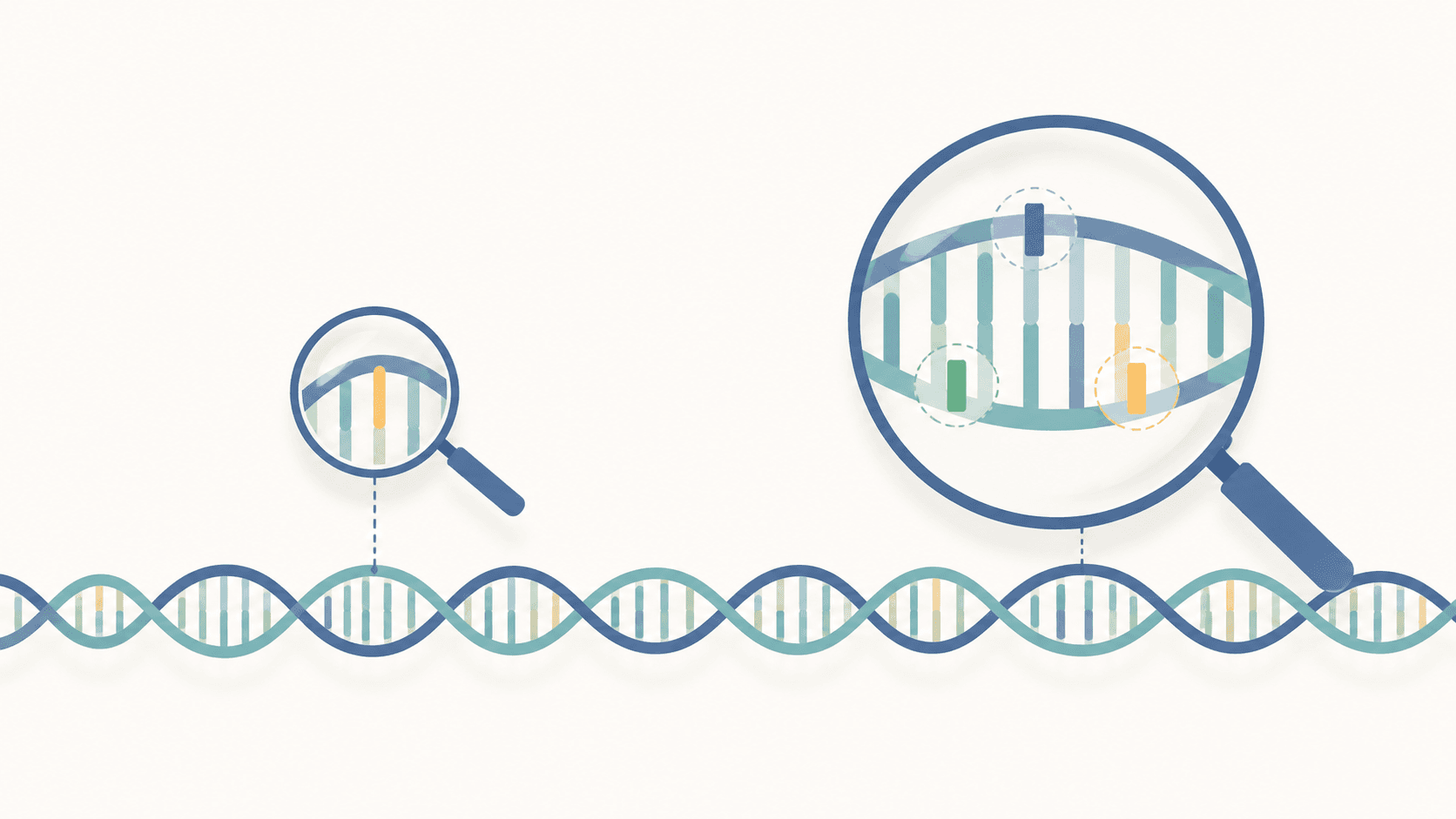
ClinVar catalogs relationships between variants and health conditions. Independent tools can compare raw data against ClinVar entries and surface possible flags outside a consumer report's curated panel.
This is not the same as diagnosis. Consumer arrays miss many important variant types, and even a detected marker can require confirmation, family-history context, phenotype review, and professional interpretation. The useful output is a prioritized list of "ask a clinician about this" items, not a final answer.
This is especially important for genes with high public attention, such as BRCA1/BRCA2. The FDA's authorization for 23andMe's selected BRCA report was specific to selected variants, and 23andMe later expanded that selected-variant list. A negative selected-variant report still does not rule out hereditary cancer risk.
Sources:
- FDA decision summary for 23andMe BRCA1/BRCA2 selected variants
- 23andMe BRCA1/BRCA2 selected variants update
- ClinVar
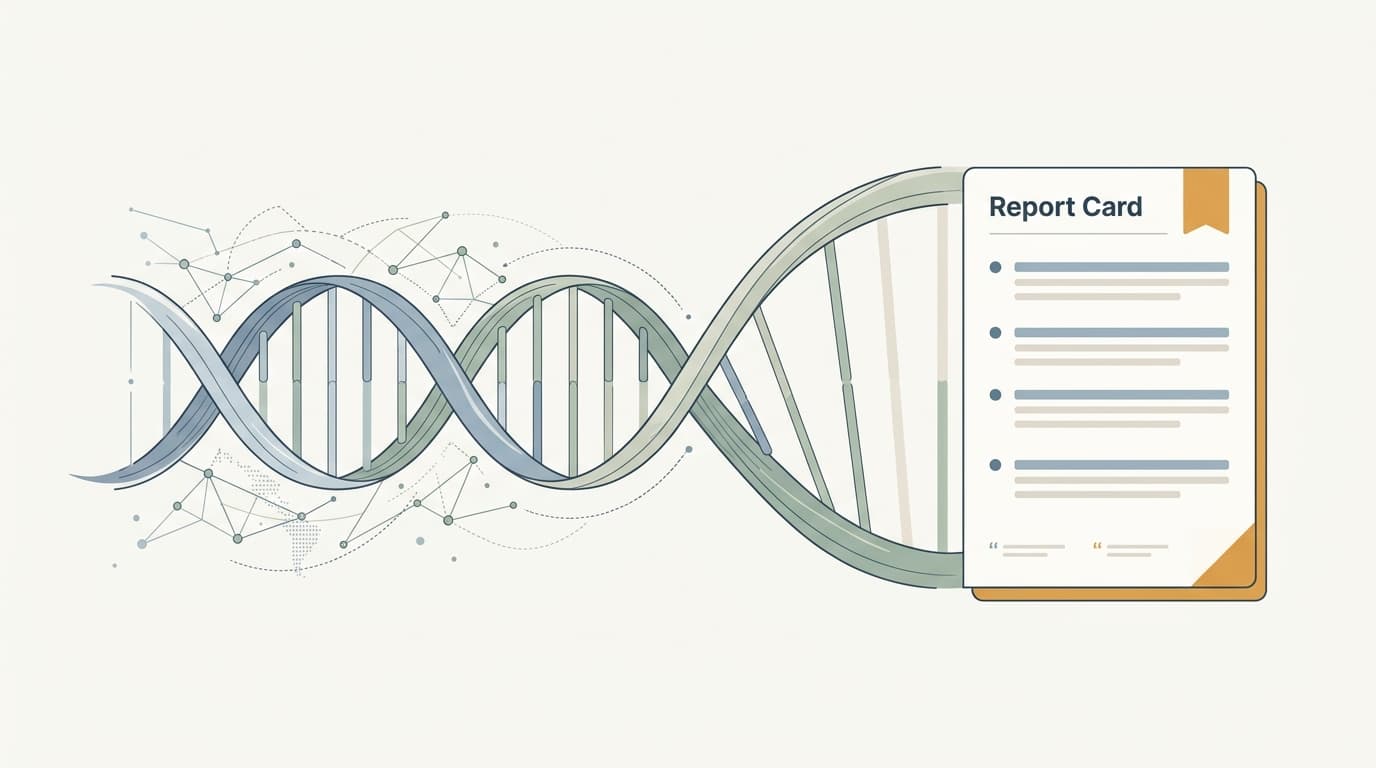
4. A report your clinician can actually scan
A raw genotype file is not a clinician handoff. A 600,000-row text file is not designed for a 15-minute appointment.
A useful independent report should compress the file into:
- Top findings with evidence strength
- What the variant can and cannot imply
- Why the finding matters for this person's profile
- Questions to ask a clinician
- Citations to primary sources
- Clear warnings where clinical-grade testing is needed
That handoff format is often more valuable than another giant variant table. If your goal is a doctor appointment, read bringing genetic results to your doctor before you upload anywhere.
When the second look is worth it
Independent analysis is most worth paying for when at least one of these is true:
| Situation | Why independent analysis can help |
|---|---|
| You already have a 23andMe file and want more health context | Re-analysis is cheaper and faster than buying a new test. |
| You want nutrition, methylation, supplement, sleep, or fitness context | These topics often need broader variant coverage and personal context. |
| You are preparing for a clinician visit | A structured report can turn raw data into questions. |
| You are curious about medication-response research | PGx topics can be flagged for discussion with a clinician. |
| You want citations, not just trait summaries | Good tools show the source behind each important claim. |
| You want to compare services before paying | See GenoSight vs Promethease vs SelfDecode for a price-and-feature comparison. |
It is probably not worth it if you only wanted ancestry, if you do not plan to read the output, or if the question is already clinical enough to justify going straight to a clinician or genetic counselor.
Cost logic: re-analysis vs a new test
There are three common next steps after 23andMe:
| Next step | Typical reason | Main trade-off |
|---|---|---|
| Re-analyze your existing raw file | Lowest-friction health-context upgrade | Limited by the consumer-array markers already present. |
| Buy another genotyping-array test | Compare ancestry databases or specific consumer features | Often duplicates much of the same kind of data. |
| Order clinical testing or whole-genome sequencing | Clinical-grade question, rare disease workup, cancer risk, carrier screening, or deep variant discovery | Higher cost, more process, and usually needs professional interpretation. |
For most people with a 23andMe file, independent analysis is the sensible middle step. It is not "better DNA." It is a better explanation of the DNA markers already measured.
What independent tools cannot do
The ceiling matters as much as the upside. Independent raw DNA analysis cannot:
- Diagnose, treat, prevent, or rule out disease
- Replace a clinician, pharmacist, or genetic counselor
- Reliably detect rare variants not present on the genotyping array
- Interpret structural variants, copy-number variants, repeat expansions, or many insertions/deletions
- Turn low-quality raw markers into clinical-grade evidence
- Tell you to change medication or supplements without medical context
Treat the result as an educational map. The map can show where to look more carefully; it is not the territory.
For the technical limits, see what consumer DNA tests can and cannot tell you.
How GenoSight handles a 23andMe second look
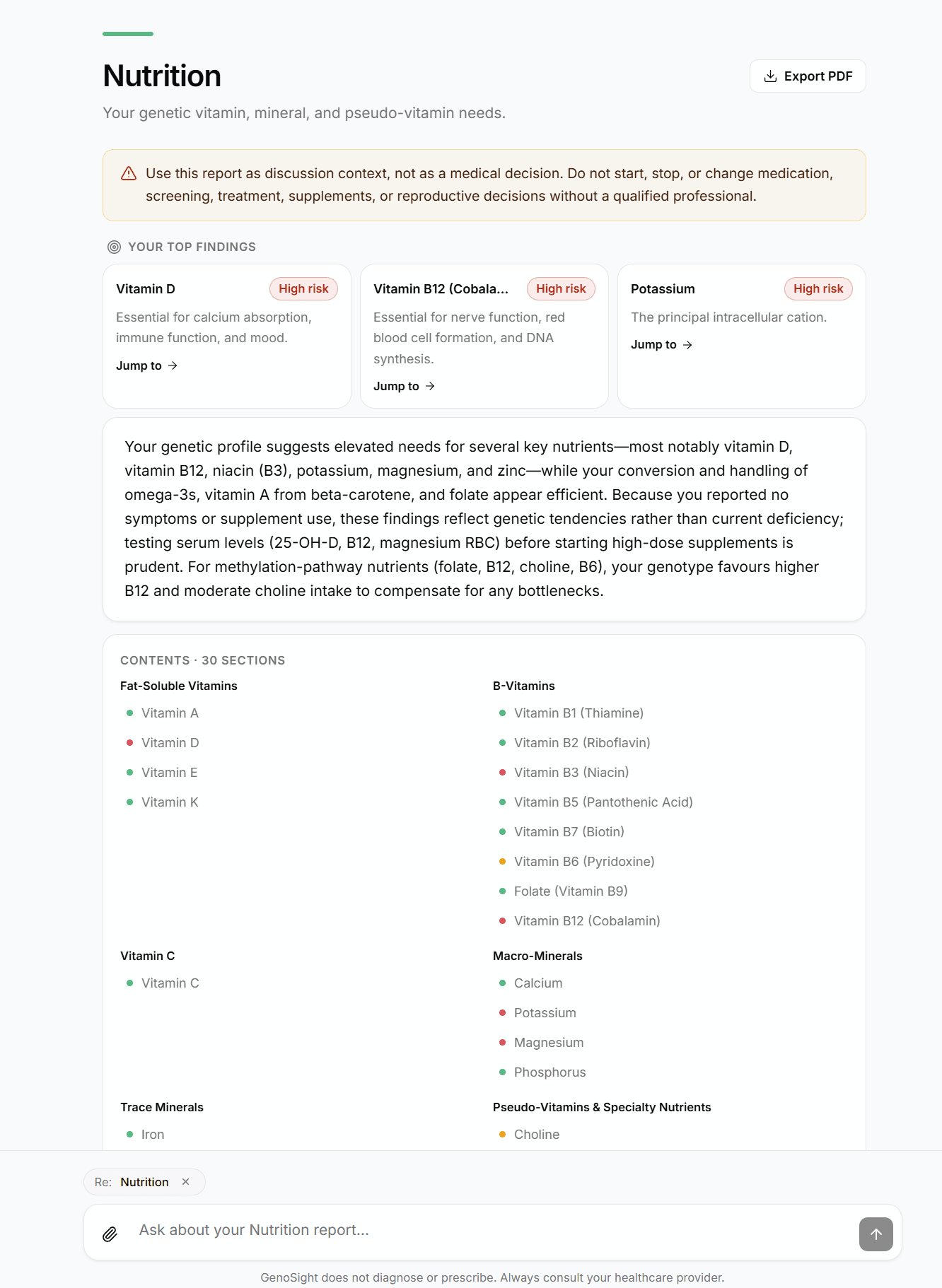
GenoSight is built for people who already have a raw file from 23andMe, AncestryDNA, or MyHeritage and want a clearer health-oriented second pass.
The workflow is:
- Upload the raw DNA file.
- GenoSight checks parser compatibility and marker coverage.
- The analysis engines scan curated lifestyle SNPs, ClinVar entries, and pharmacogenomics evidence sources.
- The synthesis layer uses your six-domain personal profile: demographics, symptoms, supplement stack, allergies, habits, and goals.
- The final report explains findings in context and links claims back to sources.
That context layer is the difference between a generic variant lookup and a useful report. The same APOE, MTHFR, HFE, or COMT result can matter differently depending on age, symptoms, habits, supplements, family history, labs, and the question you are trying to answer.
Read next:
- What is in a GenoSight report
- Where GenoSight insights come from
- How AI reads your DNA
- Raw DNA data privacy
Already have your 23andMe file?
Upload it free. 250 signup credits are enough to try a focused report before choosing a paid plan.
Medical disclaimer
GenoSight provides educational information about your genetic data. It is not a medical diagnosis, treatment, or cure. Always consult your healthcare provider before making decisions based on this information. Variant interpretation evolves; recheck periodically.
Key takeaways
- 23andMe is a curated consumer report; independent analysis is a broader second pass over the raw genotype file.
- The best second-look use cases are nutrition, methylation, lifestyle context, clinician prep, and medication-response research questions to discuss with a professional.
- Independent analysis is not diagnostic and cannot overcome the technical limits of a consumer genotyping array.
- Re-analysis is usually the lowest-friction next step before buying another test or pursuing clinical-grade sequencing.
- GenoSight turns an existing 23andMe, AncestryDNA, or MyHeritage raw file into context-aware educational reports with source-linked findings and a clinician-friendly structure.