snps explained
AI DNA Analysis: What It Can and Cannot Tell You
AI DNA analysis turns raw variants into cited, context-aware reports. Learn what it does well, where it fails, and how to use it safely.
Sebastian Thorp · May 7, 2026 · 8 min read
In short
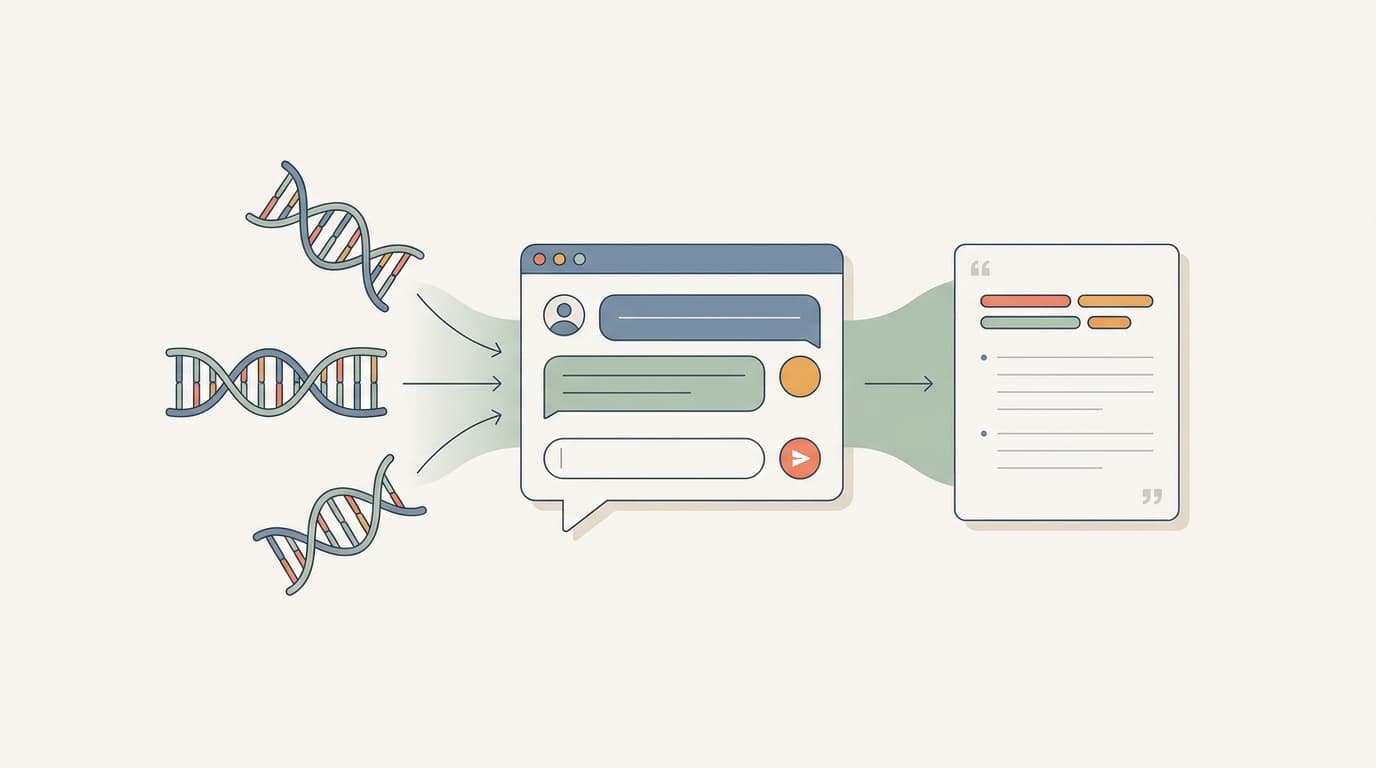
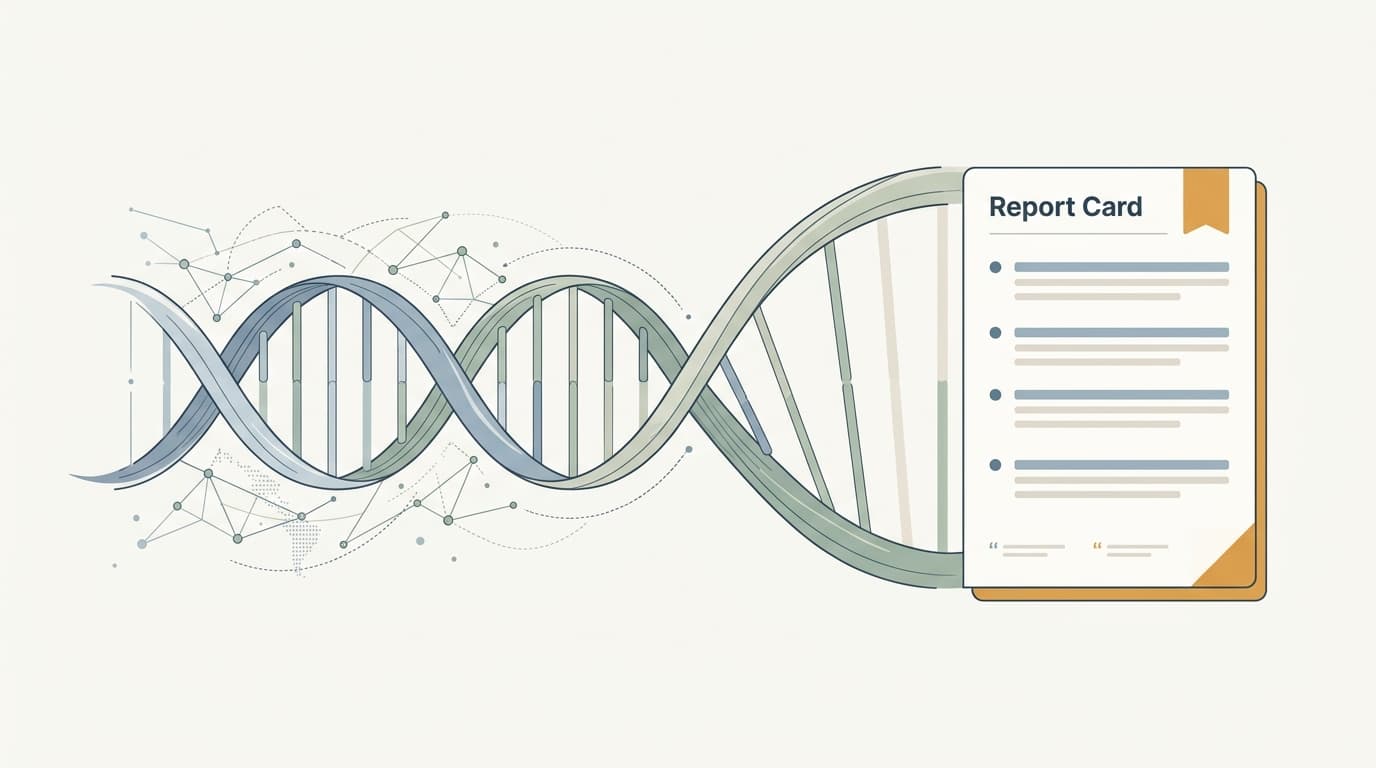
"AI DNA analysis" is the use of large language models to synthesize the published evidence about your specific genetic variants against your specific health context — a job that previously required either a geneticist or hours of patient self-research. The science (which variants matter, what they do, at what evidence level) lives in curated databases like ClinVar, PharmGKB, and the GWAS Catalog. What AI adds is the synthesis step. It does not — and should not — diagnose, prescribe, or replace a clinical conversation.
What "AI DNA analysis" actually means
The phrase gets used loosely by tools that do very different things.
Some products use AI for one narrow step — typically a chatbot wrapped around a static report. Others use it end-to-end: synthesis of engine findings, prioritization against a personal profile, follow-up Q&A, and citation re-checking. A few use the label as marketing without doing any AI synthesis at all.
The honest framing is that AI is most useful for the part of genetic interpretation that isn't a science problem — it's a context problem.
The science is settled in curated databases. The catalog of "this variant is associated with this trait at this evidence level" already exists, maintained by NIH, EBI, and academic consortia. The bottleneck has always been mapping that evidence against your specific situation: your current supplement stack, your symptoms, your family history, your goals, the medication your prescriber just suggested.
AI DNA analysis closes that gap.
The four jobs an AI DNA tool does well
Across legitimate AI DNA analysis tools, the same four jobs come up. A pillar product gets all four right.
1. Synthesizing variants → a coherent report
A typical 23andMe or AncestryDNA file contains 600,000+ variant calls. Most are silent, ambiguous, or untyped. A small fraction map onto well-studied biology.
The synthesis step takes the structured findings from analysis engines (curated lifestyle SNPs, drug-gene interactions, disease variants) and produces one readable narrative instead of a thousand isolated lookups. It's the difference between a spreadsheet of rsIDs and a prioritized "here's what to know first" report.
2. Personalizing against your health profile
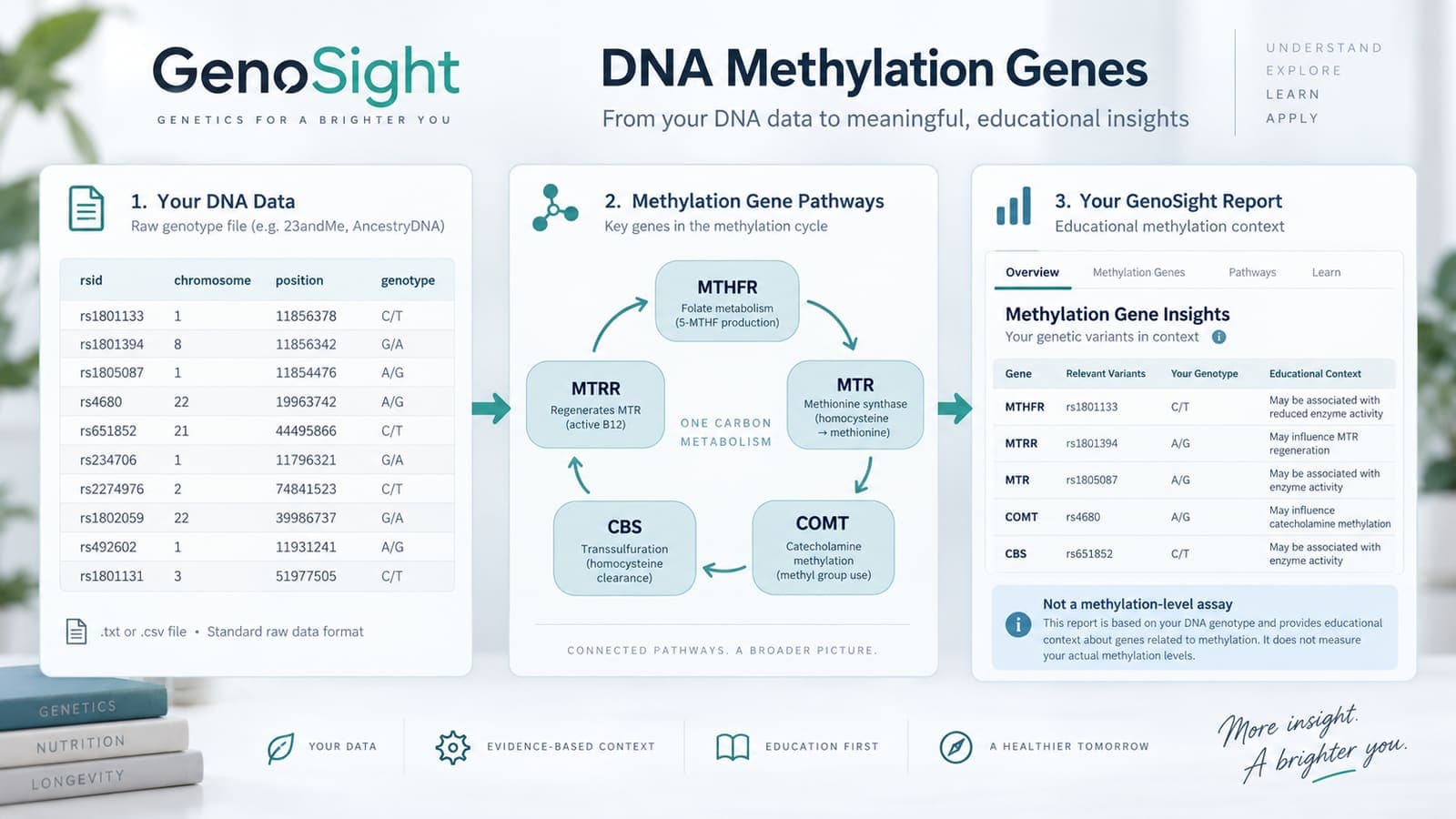
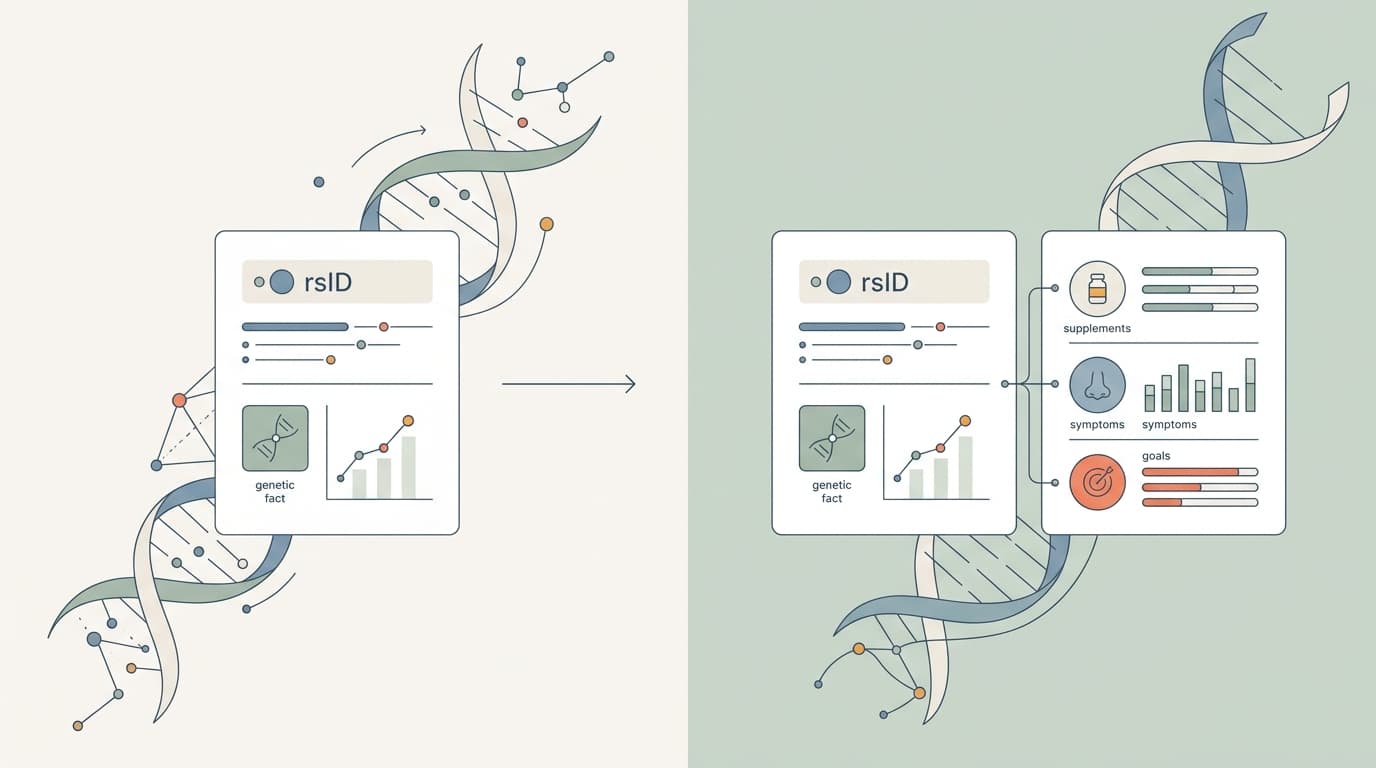
A C677T heterozygous result for someone reporting no concerns and not currently supplementing reads differently than the same variant for someone reporting persistent fatigue who is already taking a B-complex with synthetic folic acid. Same genotype. Different relevant story.
Modern AI DNA analysis platforms join engine findings against a structured personal profile — supplements, symptoms, habits, goals — before synthesis. (How GenoSight handles this in detail.)
3. Following up: chat-with-your-DNA
A static report — even a good one — can't anticipate every question a reader will have. The follow-up is where AI earns its keep.
Real questions GenoSight users ask their findings chat:
- "What's the difference between methylated and non-methylated B12 forms in general?"
- "How is my CYP1A2 result described in the GWAS literature?"
- "What does ClinVar's two-star confidence actually mean for this variant?"
- "Which of my findings would be most useful to mention at my next clinical appointment?"
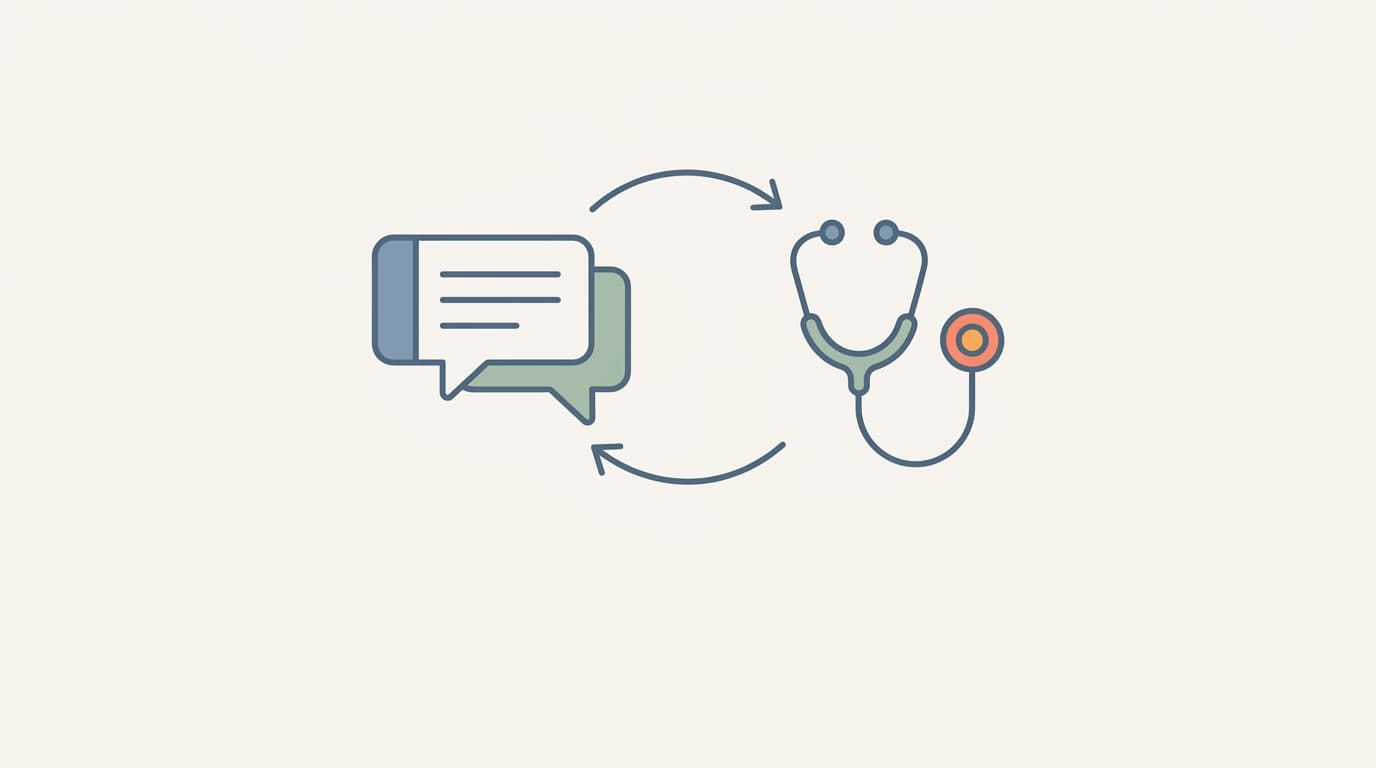
Each answer is grounded in your specific findings, not a generic FAQ. This is the conversational layer that distinguishes "AI DNA analysis" from "AI-styled DNA report" — the former is a dialogue, the latter is just a PDF with a chat icon.
4. Citation discipline
This is the job most loose-AI tools fail.
Genetic content lives in primary research and curated knowledge bases. A trustworthy AI DNA analysis cites every factual claim back to:
- ClinVar — clinical variant interpretations, scored by review-confidence stars
- PharmGKB — drug-gene interactions, evidence Levels 1A through 4
- GWAS Catalog — genome-wide association studies, with effect sizes and study power
- gnomAD — population allele frequencies for context
- Peer-reviewed literature via Europe PMC or PubMed
Without citations, an AI report is indistinguishable from confident-sounding speculation. The validator step in a serious pipeline checks every claim against its underlying source before delivery.
What AI DNA analysis is not
Three things worth being explicit about, because the loose use of the term creates confusion:
Not a diagnosis. Variant associations describe statistical relationships in studied populations, not deterministic outcomes. "Associated with" is not the same as "causes." Ranking high on a polygenic risk score for a condition doesn't mean you have it. AI DNA analysis is educational and informational, full stop.
Not a replacement for clinical genetic testing. Consumer DNA chips genotype around 600,000 of your roughly 3 billion bases. Many actionable variants — whole-gene deletions, structural variants, rare pathogenic changes — aren't on consumer arrays at all. Clinical-grade testing exists for a reason.
Not the same as photo-based or behavior-based "AI DNA tests." Apps that claim to analyze your DNA from a face photo or social-media activity don't analyze DNA. They estimate ethnicity or traits from external signals. Useful or not, it's a different category.
The five-stage pipeline GenoSight runs
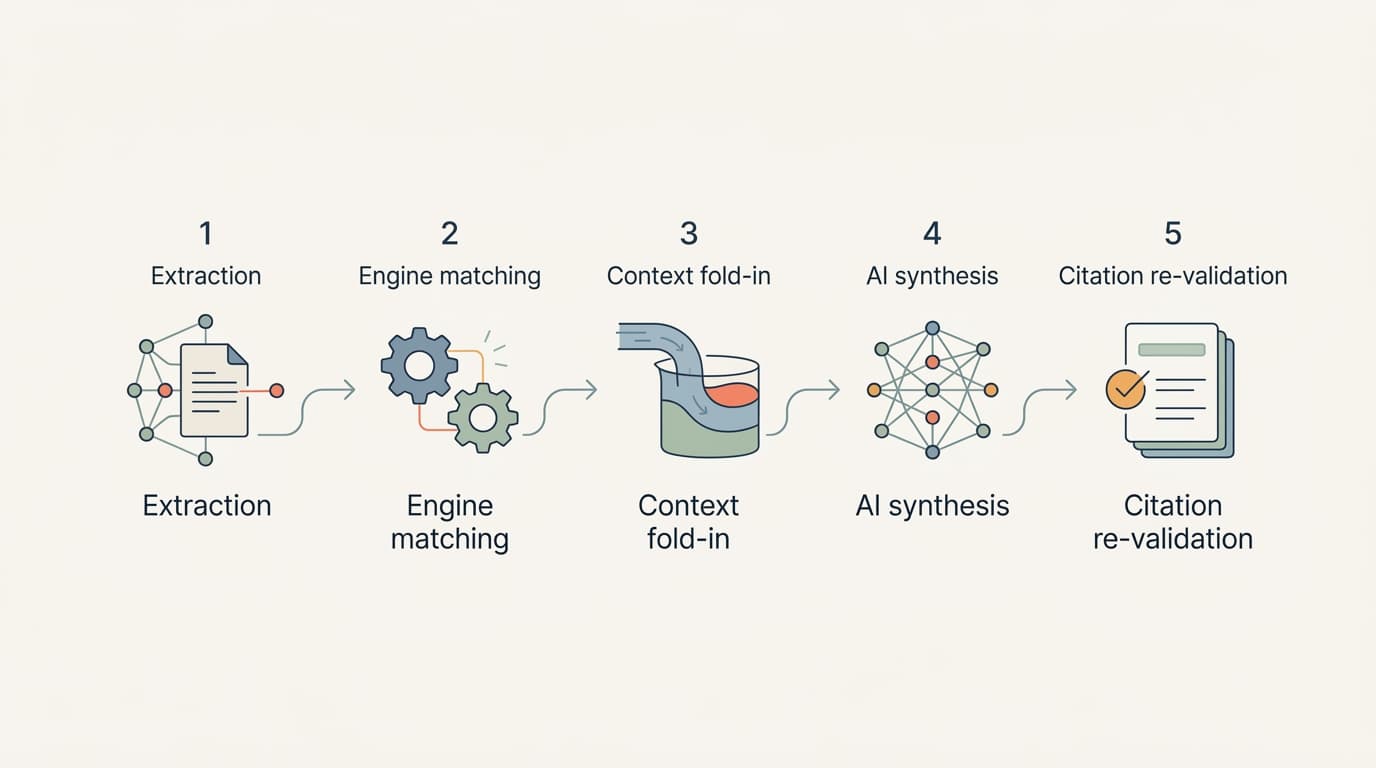
If you want the technical detail of one specific implementation, this is how GenoSight's pipeline works end-to-end.
- Extraction — parses your raw 23andMe / AncestryDNA / MyHeritage file, normalizes formats across the three providers, handles strand-orientation. No AI in this stage; pure parsing.
- Engine matching — three deterministic engines run in parallel: a curated 79-SNP lifestyle catalog across 16 categories, a PharmGKB drug-gene engine restricted to evidence Levels 1A–2B, and a 341,375-variant ClinVar disease-variant scan filtered to gold-star confidence.
- Context fold-in — engine findings get joined against your structured personal profile (demographics, supplements, allergies, symptoms, habits, goals — collected via a 9-domain onboarding chat).
- AI synthesis — the context-augmented findings go to Anthropic Claude with a prompt that produces a structured report covering executive summary, prioritized findings, and educational notes. Critically, the raw genotype file is never sent to the LLM — only the structured findings + profile context. (Full privacy detail.)
- Citation re-validation — every factual claim in the synthesized report is mapped back to its underlying engine finding. Reports failing this check go to a review queue, not delivery.
Total time from upload to delivered report: under 60 seconds in typical conditions.
The deeper technical walk-through is on the dedicated post: How AI Reads Your DNA: Inside the Synthesis Pipeline.
How AI DNA analysis tools differ from each other
The category includes products that share the label but differ substantially in what they actually do. The functional axes that matter:
| Capability | Why it matters |
|---|---|
| AI synthesis vs. variant lookups | A wiki-style "rs1801133 is associated with reduced MTHFR activity" page is a lookup. A synthesis takes that same variant, joins it to your B-vitamin stack and reported fatigue, and produces "your supplementation choice may matter more than average." |
| Personal context fold-in | Does the tool ingest a structured profile (supplements, symptoms, goals) before synthesis, or does it serve the same report regardless of who you are? |
| Findings-grounded chat | Can you ask follow-up questions and get answers grounded in your specific findings, or is the chat a generic Q&A bot? |
| Citation transparency | Does every claim link back to a primary source (ClinVar, PharmGKB, GWAS Catalog), or are sources implied? |
| Privacy posture | Is the raw genotype file ever sent to an LLM? (It shouldn't be.) Are findings retained and trained on, or zero-retention? |
For a side-by-side that names names, see GenoSight vs Promethease vs SelfDecode vs Nebula.
When AI DNA analysis is useful — and when it isn't
Useful when: you have a consumer DNA file, want to understand the actionable parts of it without reading 50 PubMed papers, and want to know which findings to bring up at your next health appointment. Educational use, lifestyle context, supplementation choices, drug-gene awareness before a prescription decision.
Not the right tool when: you have a specific clinical question that needs a diagnosis (use a clinical geneticist), you're family-planning and need rigorous carrier screening (use clinical-grade testing through your healthcare provider), or you're seeking confirmation of a result you've already received clinically (the consumer chip may not have typed the relevant variant).
The product is a translator between the published evidence and your specific situation, not a substitute for clinical care.
Practical guidance: what to look for in an AI DNA analysis tool
If you're shopping the category, the five questions to ask:
- What does the AI specifically do? Synthesis of structured engine findings, or just a chat skin over a static report?
- Does it ingest a personal profile? Without context about who you are, every report is the same report.
- Does it cite primary sources? Every factual claim should trace back to ClinVar, PharmGKB, GWAS Catalog, or peer-reviewed literature.
- Where does the raw file go? It should never be sent to the LLM. Only structured findings should leave the encrypted store.
- Does it acknowledge uncertainty? Variants have evidence levels. A tool that presents everything with the same confidence is a tool that's hiding the uncertainty.
The signal is consistent across the well-built tools in this space: depth + personalization + citations + restraint about what AI can claim.
See your own AI DNA analysis
Upload your raw 23andMe, AncestryDNA, or MyHeritage file. Free 250 signup credits. No credit card required to try.
Medical disclaimer
GenoSight provides educational information about your genetic data. It is not a medical diagnosis, treatment, or cure. Variant associations describe statistical relationships, not deterministic outcomes. Always consult your healthcare provider before making decisions based on this information. Variant interpretation evolves; recheck periodically.
Key takeaways
- AI DNA analysis is synthesis, not a substitute for genetic science. The science (which variants matter, at what evidence level) lives in curated databases. AI removes the bottleneck of mapping that evidence against your specific health context.
- Four jobs distinguish a serious AI DNA tool: report synthesis, personal-context fold-in, findings-grounded follow-up chat, and rigorous citation discipline.
- Citations matter: every factual claim should trace back to ClinVar, PharmGKB, GWAS Catalog, or peer-reviewed literature. Without them, AI output is indistinguishable from speculation.
- Privacy posture matters: the raw genotype file should never be sent to an LLM. Only structured findings + profile context should leave the encrypted store.
- It's not diagnostic. AI DNA analysis is educational, lifestyle-focused, and intended to inform — not replace — clinical conversations.
- Specific implementation: GenoSight's five-stage pipeline (extraction → engine matching → context fold-in → AI synthesis → citation re-validation) generates a personalized report in under 60 seconds, with the raw file kept encrypted at rest and never sent to the LLM.